
5 Best Fences for Dogs (Tested Against Diggers, Climbers, and Jumpers)
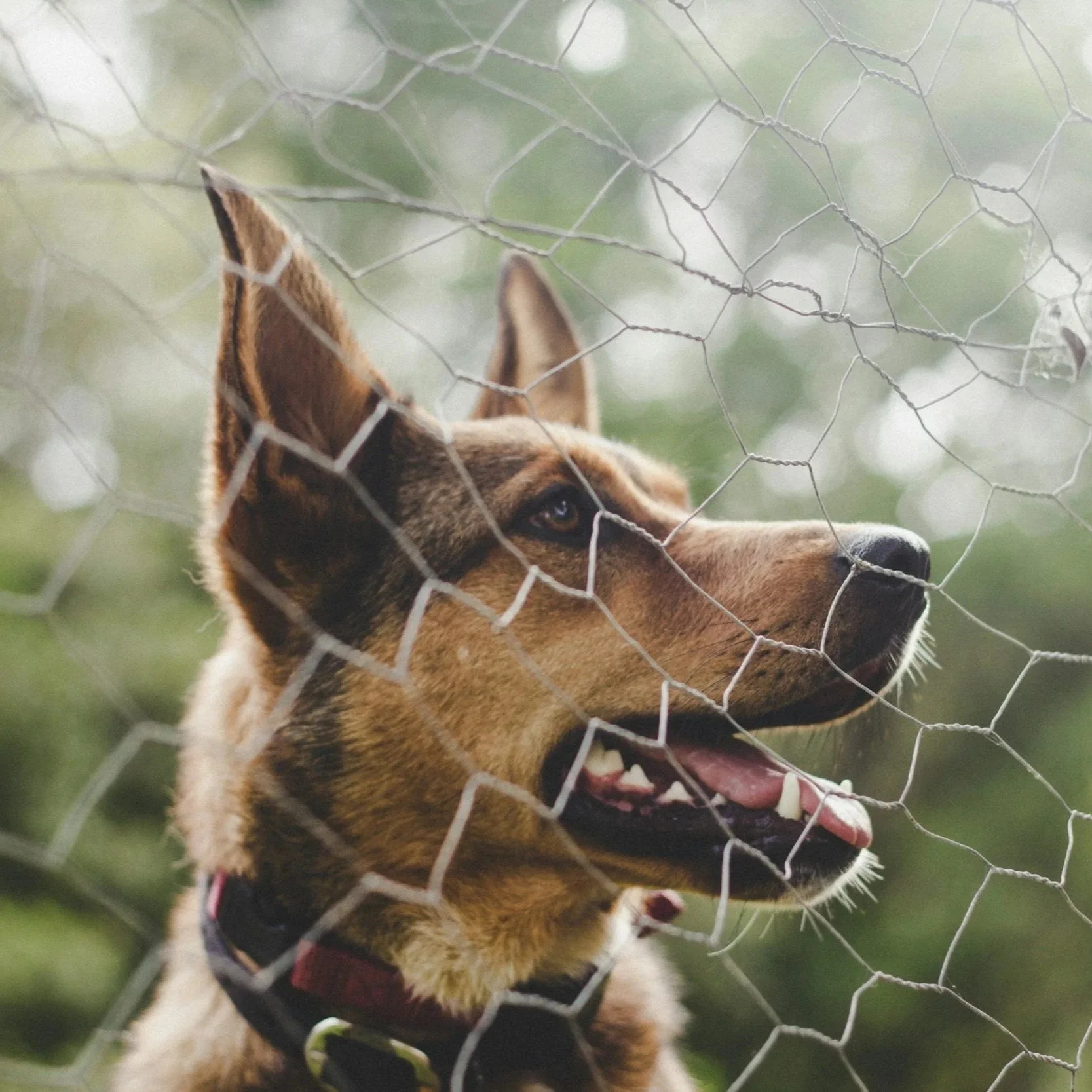
German shepherd standing behind protective wire fencing, representing secure dog fence solutions for climbers, jumpers, and escape-prone pets.
If you have a dog that has escaped before, or you are buying a fence with the dog in mind from the start, the choice depends on what kind of escape artist you are dealing with. Diggers go under. Climbers go up the fence itself. Jumpers clear the top. Most dogs use one method consistently; a few committed escape artists try all three until one works. The right fence is the one that handles your specific dog’s escape behavior, not the universal “dog fence” that some contractors pitch as if all dogs were the same.
First, Identify Which Kind of Escape Artist You Have
Three escape behaviors drive most yard breakouts. Which one your dog uses determines which fence will actually hold.
Diggers go under the fence regardless of its height. Terriers, hounds, huskies, and many mixed breeds dig as a default behavior. A 6-foot fence does nothing for a dog that goes under instead of over. Diggers are the hardest escape artists to stop because the fix involves what is below ground, not above it.
Climbers use the fence itself to escape, gripping wood slats, chain link mesh, or rail tops to pull themselves up. Smaller agile breeds, working dogs, and dogs with high prey drive often climb. Some climbers can scale a 6-foot wood fence in under a minute when motivated by a squirrel on the other side.
Jumpers clear the fence in a single leap from a standing or running start. Most large athletic breeds can clear a 4-foot fence easily; some can clear 6. Border collies, working breeds, and many large mixed breeds have the spring to clear most residential heights.
A few dogs combine methods. The most committed escape artists try all three until one works. The fence has to handle whichever methods your specific dog uses, not the average dog.
1. Aluminum Picket Fence — Best Overall for Most Dogs
Aluminum picket fencing handles climbers and jumpers well, which covers most dogs. The smooth metal surface gives no grip for climbing. The vertical pickets are too narrow to wedge claws between for traction. Standard residential heights run 4 to 6 feet, with 5 feet being the most common dog-containment choice for medium-sized dogs.
The strengths for dogs are clear: no grip surface for climbers, sturdy enough that jumpers cannot bend or push through, long-lasting in Cape Fear humidity with no rot or rust to weaken over time. The open design also lets your dog see out, which actually reduces barking and territorial behavior for many dogs.
The weakness is diggers. Pickets do not stop a dog that goes under instead of through. Adding a buried L-footer (chicken wire bent at a right angle and buried along the fence line) handles diggers, but adds cost and is not always allowed by HOAs. The same open design that calms most dogs can increase reactivity in dogs that bark at every passing trigger.
Industry pricing typically runs $30 to $50 per linear foot installed. A 200-foot residential fence runs $6,000 to $10,000.
2. Solid Wood Privacy Fence — Best for Climbers and Visual Reactivity
A solid wood privacy fence handles climbers reasonably well and eliminates visual triggers entirely. The flush-board surface provides less grip than an open-design fence. For dogs that bark at every passing person, removing the visual trigger can noticeably calm barking.
Wood works well when your dog is reactive to what is on the other side of the fence. The 6-foot solid panel blocks visual stimulation that triggers barking and fence-running. Climbers find less grip than on chain link or open-picket designs. The full 6-foot height handles most jumpers.
Wood does not stop diggers without buried barriers. Some climbers can still scale solid wood by jumping to grab the top rail and pulling up. Wood also requires more maintenance than aluminum, with sealing every 2 to 3 years to prevent rot in NC's humid climate. Pressure-treated pine lasts 12 to 15 years; cedar lasts longer at a higher upfront cost.
Industry pricing typically ranges from $15 to $40 per linear foot installed, depending on the wood type.
3. Vinyl Privacy Fence — Best for Low-Maintenance Dog Containment
Vinyl privacy panels combine the visual-blocking benefits of wood with the low-maintenance profile of aluminum. If you want a privacy fence without the wood maintenance schedule, vinyl is the right call.
The smooth vinyl surface gives almost no grip for climbers, even less than solid wood. Solid panels block visual triggers. Standard 6-foot heights handle most jumpers. No staining or sealing required, just occasional cleaning with soap and water.
Vinyl does not stop dedicated diggers. Vinyl panels can also crack under impact from a 60-pound dog hitting them at full sprint, though damage is rare with quality vinyl. Color options are limited compared to wood, though most dog owners care more about fence performance than fence color.
Industry pricing typically runs $25 to $40 per linear foot installed.
4. Chain Link with Privacy Slats — Budget Option That Still Works
Chain link with woven privacy slats is the budget-friendly dog fence option. The chain link itself is climbable for many dogs because the woven mesh provides plenty of paw grip, but slats reduce climbing motivation by removing visual stimulation. For larger lots where you need to fence a wide perimeter on a tight budget, chain link with slats works.
The strength is cost: chain link with slats costs about half as much as wood or vinyl. Slats handle visual reactivity. Standard 6-foot heights handle most jumpers.
The weakness is the chain link mesh itself. Climbers can still scale chain link even with slats, because the mesh gives paw grip regardless of what is woven through it. Diggers still go under. Most Cumberland County HOAs prohibit street-visible chain link entirely, and even where chain link is allowed, the slats give it a utilitarian look that does not match neighborhood aesthetics in most subdivisions.
Industry pricing typically runs $10 to $25 per linear foot installed for chain link with slats.
5. Wrought-Iron-Style Aluminum with Bottom Rail — Best for Determined Diggers
If you have a serious digging dog, an aluminum fence with a tight bottom rail set close to the ground or on a concrete base is the strongest dig-resistant option. The bottom rail provides the same anti-dig benefit as a buried L-footer without the burial labor.
The bottom rail blocks diggers from getting underneath. The aluminum surface stops climbers. Tall variants handle jumpers. The aluminum holds up in humidity with no rot or rust, just like standard aluminum pickets.
The trade-off is cost. This is the most expensive option per linear foot. The open picket design still allows visual stimulation, so reactive dogs may still bark and run the fence line. Some bottom-rail designs require concrete pads or grading work along your fence line, which adds to the installation cost.
Industry pricing typically runs $35 to $55 per linear foot installed.
How to Match the Fence to Your Specific Dog
Three quick decision rules.
Diggers need bottom protection regardless of fence type. Either a buried L-footer (chicken wire bent at a right angle, buried 12 inches along the fence line, then extending up the fence 6 to 12 inches) or a fence with a tight bottom rail. Without one of those, every fence loses to a determined digger eventually.
Climbers need surfaces that give no grip. Aluminum and vinyl beat wood, which beats chain link. The taller the fence, the better. Six feet stops most climbers, 5 feet stops some, 4 feet stops a few.
Jumpers need height first, sight-blocking second. Six feet stops most jumpers; some athletic breeds need 7 or 8 feet. Solid panels can actually reduce jumping by removing the visual stimulus, since many dogs jump at things they see, not over fences for the sake of it.
For dogs that combine methods, layer the solutions: tall, smooth, and bottom-protected. That is the most secure setup, and it costs more. Most dogs do not need the layered approach, but the dogs that do are not subtle about it.
What to Tell Your Fence Contractor
When you schedule an estimate, be ready to share:
Your dog’s breed and weight
Whether your dog has escaped before, and how
Whether your dog has a high prey drive or strong reactivity to triggers
Other animals in the yard or neighborhood that might trigger escape attempts
Property layout details: slopes, drainage issues, mature trees near the fence line
A fence contractor who understands your specific dog and yard can recommend modifications that off-the-shelf fences do not include. The Fayetteville Fence Company LLC treats dog containment as a real design constraint, not an afterthought, and includes install history for most local breeds and yard types in every estimate.
Frequently Asked Questions
Six feet handles most large dogs. Athletic working breeds (Belgian Malinois, border collies, large mixes with strong jumping ability) sometimes need 7 or 8 feet. Standing height alone is not enough; a dog that gets a running start can add vertical reach beyond what its standing height suggests.
For some dogs, in some situations. Invisible fences work on dogs that respond to training and stay deterred by the static correction. They do not work for high-prey-drive dogs that will run through the correction to chase a rabbit, and they do nothing to keep other animals out of your yard. A physical fence is more reliable for most dogs and offers protection in both directions.
Three options work. A buried L-footer (chicken wire bent at a right angle and buried along the fence line) is the most common. Concrete pads along the fence line work for short runs. A fence with a tight bottom rail close to grade level eliminates the need for additional barriers. Surface deterrents, such as rocks or gravel, rarely deter committed diggers.
An L-footer is a strip of chicken wire or hardware cloth bent at a right angle. The horizontal portion is buried 12 inches deep along the fence line, extending 12 to 24 inches into the yard. The vertical portion attaches to the fence 6 to 12 inches up. When the dog tries to dig at the fence line, the buried wire blocks the dig. After a few attempts, most dogs learn the spot will not yield and stop trying.
Vinyl. Wood gives chewers something to grip and remove. Vinyl is hard enough to discourage chewing and does not splinter into pieces that dogs can swallow. For dogs that chew their own fence, vinyl is the safer choice for both the fence and the dog.
Often yes for back yards, less often for front yards. Most Cumberland County HOAs cap privacy fences at 6 feet in back yards, which works for most dogs. Front-yard privacy fences are commonly prohibited regardless of pet considerations. Verify your HOA’s rules before designing the fence.
Match the fence to your dog, not to the average dog. A digger needs bottom protection, a climber needs a smooth surface, and a jumper needs height. Most dogs only specialize in one of those, which means most homeowners only need one solution layered onto a standard fence. The dogs that combine methods need the full setup. Either way, the conversation starts with what your dog actually does, not with the fence material on the brochure.
Have a dog that has gotten out before, or want to make sure the next fence holds? The Fayetteville Fence Company LLC designs dog-containment fences for Fayetteville and Hope Mills properties. Free estimates and 12-month warranties on every install. Call (910) 994-3634 to schedule.
