
7 Signs Your Fence Needs Replacement (Not Just Repair)
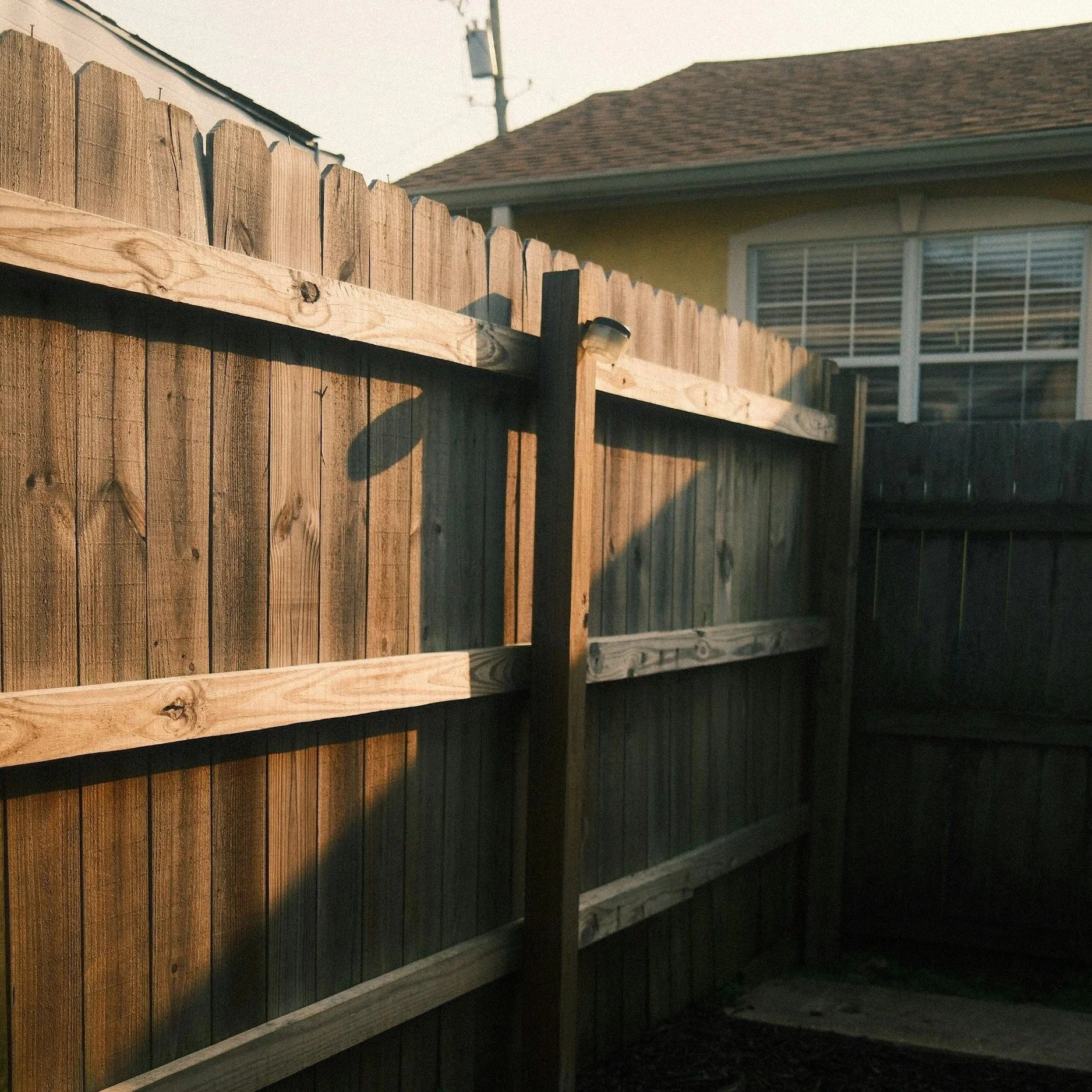
Aging wooden privacy fence with visible wear highlighting common structural problems that signal replacement instead of continued repair expenses.
If your fence is showing problems and you’re wondering whether to keep patching or start over, you’re asking the right question. Most homeowners spend two or three years repairing a fence that should have been replaced. By the time they admit it, they’ve paid for the repairs, and they still need a new fence. Here’s how to read the signs your fence is giving you, and how to decide which side of the repair-or-replace line you’re actually on.
Repair vs Replace — The Real Math
Repairs make sense when the fence has solid bones. Solid posts, sound wood, working hardware, and one or two localized problems. A broken board here, a sagging gate there. That’s repair territory.
Replacement makes sense when the underlying structure is failing or when repair costs approach half the cost of a new fence. The line isn’t always obvious from a distance; it shows up clearly when you look closely.
A working rule: any one sign below probably means repair. Two signs together puts you in the gray zone. Three or more, and you’re spending good money to delay an inevitable replacement.
Sign 1 — Multiple Posts Are Leaning or Shifting
The first place a fence fails is the post foundation. One leaning post is fixable. Multiple posts leaning means the foundation is gone. The cause is almost always saturated Sandhills soil, rotted post bases, or undersized footings that have given up after years of wet ground.
Walk to your fence and try this test on every third post. Push on the top rail near the post and see how much it gives. Solid posts don’t budge. Anything that wobbles more than an inch is compromised. If three or more posts on a 100-foot run wobble, the post foundation system is failing, and patching the worst one won’t save the rest.
Sign 2 — Rot at the Base of Multiple Boards
Wood fences fail from the bottom up. Bottom rails sit closest to the wet ground. Lower boards absorb rain splash from grass and soil. When multiple boards have soft, spongy, or visibly rotted bases, you’re seeing system failure, not isolated damage.
Press a screwdriver into the wood near the base of the board. If it sinks in with light pressure, that board is gone. One soft board is a repair job. Five or six along a 50-foot run usually means the whole stretch is on its way out.
Sign 3 — You’ve Already Repaired It Twice in Three Years
Fences fail in patterns. The first repair is often legitimately localized: a tree branch took out one panel, a car backed into a section, a kid’s ball broke a board. The second repair within a few years usually means the rest of the fence is right behind. By the third repair, you’re spending real money to keep a failing fence upright.
Add up what you’ve spent on repairs in the last three years. Compare it to the cost of a new fence. The math usually surprises people. A fence that needs $400 in repairs every 18 months hits $1,600 over six years. A new fence costs more upfront but resets the clock for 15 to 25 years.
Sign 4 — Hardware Is Failing Throughout, Not in One Spot
Rusted brackets, broken screws, sheared hinges, corroded fasteners. When these problems show up across the whole fence rather than at one section, the hardware was either undersized at installation or has aged out from years of Cape Fear humidity. Replacing all the hardware on an aging wood fence costs nearly as much as replacing the fence itself, and you’d be putting new hardware on tired wood that can’t hold it for long.
If half the screws are rusted and half the brackets are loose, the hardware is telling you the fence is older than the wood looks. We see this pattern most often on fences from the late 1990s and early 2000s, where the original installation used standard steel hardware before galvanized or stainless became common practice. Once the hardware starts failing, swapping it sounds cheap on paper, but the new fasteners need solid wood to grip, and wood that’s been weathering with that hardware is rarely solid anymore.
Sign 5 — The Fence Visibly Bows, Sags, or Has Gaps
Fences should be straight. When you see waves, dips, or bowing along the top rail, the whole structure is shifting. Gaps appearing between previously tight boards mean the wood has shrunk beyond recovery, or the rails have separated from the posts. Both are structural problems, not cosmetic ones.
Stand at one end of the fence and sight down the top rail. A new fence is a clean line. An aging fence has visible waves. A failing fence has waves you can see from across the yard.
Sign 6 — Repairs Would Cost More Than Half of a New Fence
Get an actual estimate for the repair work, not a guess. Compare it to a replacement quote. If repair runs more than 50% of a new fence’s price, replacement is the smart spend.
You’re paying half the replacement cost to extend an old fence’s life by maybe 3 to 5 years. The new fence would last 15 to 25. That’s the kind of math that looks like a deal in the moment and a mistake five years later.
Sign 7 — The Fence Is Past the Material’s Expected Lifespan
Each fence material has a typical lifespan in Cape Fear’s humidity. Wood fences run 10 to 25 years, depending on species and maintenance. Vinyl lasts 20 to 30. Aluminum and chain link typically last 25 years or more.
If the fence is past its expected lifespan, even sections that look okay are running on borrowed time. Hardware fails. Fasteners corrode. Material fatigue shows up in places you can’t see until the next storm. Knowing the install date is the cheapest way to predict what’s coming.
In the Fort Liberty area, plenty of fences from the 1990s are reaching end of life right now. The boards still look acceptable from the curb, but the hardware is hanging on by threads, and the post bases are mostly rotted. Those fences will come down at the next severe storm whether or not they were due for replacement on a calm day.
What to Do If You’re Seeing Several of These
One sign on this list is usually a repair situation. Two signs together start to suggest replacement. Three or more signs almost always mean replacement is the right call. Get a fence inspection from a contractor who’s willing to give you an honest answer rather than selling whichever option they prefer.
A good inspection takes 20 to 30 minutes. The contractor walks the fence with you, tests posts, checks hardware, and tells you what’s repairable and what isn’t. If the answer is replacement, ask for both the repair cost and the replacement cost so you can run the math yourself.
Frequently Asked Questions
Wood fences run 10 to 25 years in Cape Fear humidity, with cedar at the top of the range and pressure-treated pine in the middle. Vinyl runs 20 to 30 years. Aluminum and chain link last 25 years or more. Maintenance and installation quality moves every fence within those ranges.
Industry pricing for residential wood fences typically runs $15 to $40 per linear foot installed depending on material; vinyl is similar or slightly higher; aluminum runs higher than wood. The Fayetteville Fence Company LLC provides free quotes that account for height, gate count, terrain, and removal of the old fence.
Depends on how much of the fence is failing. If a single panel or two is bad, sectional repair is fine. If problems show up along the whole fence, replacing the whole run usually costs less per linear foot than scattered section work and gives you a uniform fence with a fresh warranty.
Sometimes, for storm damage. Routine wear and aging are usually not covered. If the fence came down in a hurricane or tree fall, document the damage with photos before cleanup and check your policy. Standard wear-and-tear replacement is on the homeowner.
Mostly yes. Push on the top rail near each post. Check for soft spots at ground level by pressing with a screwdriver. Look for sawdust around the post base, which signals insect damage. If posts wobble, the wood is soft, or there’s visible decay at ground level, the post foundation is going.
A fence that’s giving you signs is worth listening to. Patching one problem on a fence with three of these signs is the most expensive way to delay the conversation. Get a real assessment, run the math, and pick the option that fits your timeline. Whichever way it goes, knowing where you stand is the place to start.
Not sure if your fence is repairable or needs replacement? The Fayetteville Fence Company LLC provides free fence inspections and honest assessments — no pressure, just a real answer. Call (910) 994-3634 to schedule.
