
Fence Installation Cost in Fayetteville (2026 Real-World Pricing Guide)
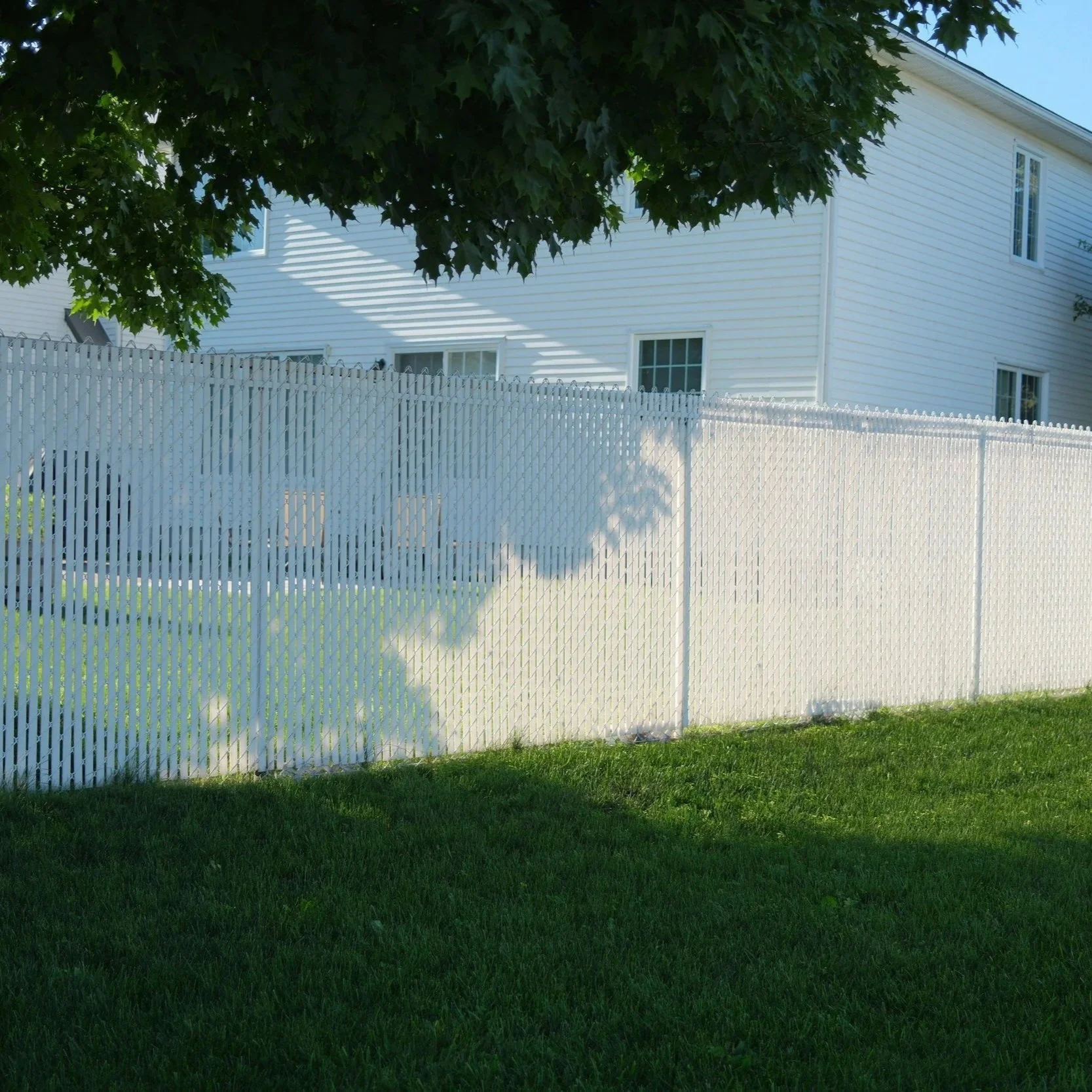
White vinyl privacy fence installed beside residential lawn, representing modern fencing costs, durability, maintenance, and neighborhood curb appeal benefits.
If you are planning a fence in Fayetteville and trying to figure out what to budget, you are going to find a wide range of numbers. Wood, vinyl, aluminum, and chain link all price differently. Even within one material, two homeowners on the same street can pay 30 to 40% different prices depending on length, gates, soil, access, and what is actually included in the quote. What follows covers what fences cost in Cape Fear country in 2026, what drives that range, and how to read quotes side by side without getting fooled by the lowest number.
The Quick Answer — What a Fence Costs in Fayetteville
A typical 150-to-200-foot residential fence in Fayetteville runs $4,000 to $12,000 fully installed. The wide spread comes from material choice, project complexity, and what the quote actually includes.
Wood and chain link sit at the lower end, with most projects landing between $3,000 and $5,000. Cedar and vinyl move up to the $5,000 to $8,000 range. Aluminum and composite usually run $6,000 to $10,000. Custom wrought iron or steel ornamental work pushes higher still. These are industry ranges; a real quote for your property depends on the specifics.
Two seemingly similar projects often land $3,000 apart. The reasons fall into three buckets: what is missing from a too-low quote, what site-specific factors drive the price, and how to compare quotes that include different scopes of work.
What Drives the Price (More Than Just the Material)
Material picks the price tier. Everything else inside that tier comes from project specifics. Here is what moves a quote up or down without anyone changing the fence type.
Linear footage is the base unit; a 200-foot run costs roughly 33% more than a 150-foot run of the same fence. Height matters too, but not proportionally. A 4-foot fence runs less than a 6-foot fence, though labor stays similar across heights, while material doubles.
Each gate adds $200 to $600 to the project, depending on size, material, and hardware. Heavy gates need larger hinges; auto-operated gates cost more still. Gate count is one of the biggest overlooked drivers when homeowners compare quotes.
Soil conditions matter in the Cape Fear region in particular. Sandhills soil requires concrete footings on every post. Some installers price this in by default; others quote without and add it later. Site access plays a similar role: truck access to the property line affects labor time, and slopes, large trees, and tight side yards all add hours to the installation.
Permits, removal of an existing fence, and property line surveys are the line items most often missing from initial quotes. Cumberland County and Fayetteville permit fees typically run $50 to $100. Old fence removal is usually $3 to $7 per linear foot. Property line surveys, when an HOA or a neighbor wants the line professionally marked, run $300 to $700.
Two homeowners on the same street with the same fence type can end up $1,500 to $3,000 apart purely from these factors. The quote spread is not always about contractors padding numbers; it can be about what your specific yard requires.
Cost by Fence Material (Industry Ranges for Cape Fear Region)
These are industry ranges for the Cape Fear region in 2026. Actual quotes vary by installer, project, and the factors above. The Fayetteville Fence Company LLC pricing falls within these ranges; a real quote on the actual property is more accurate than a generic sticker price.
Chain link is the budget leader at $10 to $25 per linear foot installed. For a 200-foot run, expect $2,000 to $5,000. It is the right choice for utility fencing, dog runs, and security perimeters where appearance is secondary.
Pressure-treated pine runs $15 to $25 per linear foot installed, putting a 200-foot project at $3,000 to $5,000. Pine is the cheapest residential wood option and lasts 10 to 15 years in Cape Fear humidity with reasonable maintenance.
Cedar runs $25 to $40 per linear foot installed, or $5,000 to $8,000 for that same 200-foot run. Cedar costs more upfront than pine but lasts roughly twice as long, often making it the cheaper fence over a 20-year window.
Vinylruns $25 to $40 per linear foot installed, putting a 200-foot project at $5,000 to $8,000. Vinyl does not rot or need staining; it is a good fit for homeowners who do not want maintenance and like the clean white look.
Aluminum runs $30 to $50 per linear foot installed, with a 200-foot project landing at $6,000 to $10,000. Aluminum is the best choice for hurricane resistance and pool fencing, and it does not rust in coastal-influenced humidity.
Composite runs $30 to $45 per linear foot installed, or $6,000 to $9,000 for the same project. Composite gives you the look of wood without the rot risk; it is a good middle ground for homeowners who want wood aesthetics with low maintenance.
Wrought iron and steel ornamental work starts around $40 per linear foot installed and runs to $100 or more, depending on design complexity. These are usually decorative front-yard or pool fences rather than full perimeter installations.
Why Sandhills Soil Adds to the Cost
Cape Fear sandy soil drains well in normal conditions but does not grip fence posts. Concrete footings are required for any fence built to last in this region. Setting posts in soil alone fails within a few years, especially after a wet season.
Concrete adds $5 to $10 per post in materials. On a 200-foot fence with posts at 8-foot spacing, that is roughly 25 posts and $125 to $250 in extra materials. It is small money against the total project, but it is the difference between a fence that lasts 5 years and one that lasts 20.
Some installers cut this corner to undercut competing quotes. The fence holds up at handoff but starts leaning within two or three storm seasons. This is one of the biggest reasons cheap fence quotes can become a false economy in Fayetteville.
If you are collecting quotes, ask each installer how they set the posts. Concrete footings should be in the answer. If they are not, that quote is not comparable to the others.
Hidden Costs Most Quotes Do Not Include
Some line items are routinely left out of initial quotes, then show up as add-ons after the contract is signed. Knowing what to ask about up front saves money and prevents surprises.
Old fence removal is the biggest one. If you have an existing fence to tear out and haul away, expect $3 to $7 per linear foot. Some quotes include this; many do not.
Permit fees are commonly separate. Most NC jurisdictions charge $50 to $100 per fence permit. Cumberland County and Fayetteville sit in that range. Some installers pull permits for you and bill the cost; some leave it on you.
Property line surveys are not standard, but they get added when an HOA or neighbor requires confirmation. Surveys run $300 to $700, depending on the property. If there is any chance of a property line dispute, getting this done before the installation is cheaper than redoing the fence later.
Tree or root removal where post lines fall through plantings adds variable cost: sometimes $0, sometimes a few hundred. It depends on what is actually in the way.
Concrete upgrades for storm-prone parts of Fayetteville (deeper or wider footings) typically add $5 to $10 per post. Galvanized hardware upgrades add small amounts that compound over a long run. Heavier gate hinges for larger gates can add $50 to $150 per gate.
Stain or sealant on wood fences is sometimes included; sometimes not. Travel charges show up if your site is outside the contractor’s typical service area, though that is rare for projects within Cumberland County.
A quote that is $1,500 cheaper than the next one usually has $1,500 worth of these items missing.
How to Compare Quotes Apples-to-Apples
Most homeowners get three quotes and pick the lowest. That is the wrong move when the quotes do not include the same things. To compare fairly, ask every contractor the same questions.
Is fence removal included? Are permits included or separate? What is the post depth and footing method? What hardware grade do you use, standard steel, galvanized, or stainless? What gate hardware are you using, and is it sized for the gate weight? Is stain or sealant on the wood included or extra? What is the warranty, in writing?
Some quotes will come back with everything included and a higher number. Others will come in lower with several items missing. Comparing them line by line is how you find out what you are actually paying for.
Ask about the timeline, too. Some contractors can start in two weeks; others have backlogs of 6 to 8 weeks. If your project is time-sensitive (selling the house, a new pool going in, livestock arriving), the timeline can matter as much as price.
When the Cheapest Quote Is the Most Expensive
The lowest quote is almost always missing something. Here is how the cheap-quote shortcuts play out in Cape Fear country.
A quote that skips concrete footings appears to save$200 in materials. The fence holds up fine for the first season. After two years, posts are leaning. After four years, you are paying for repairs or replacement. The savings turn into a multi-thousand-dollar headache.
A quote that uses 24-inch posts instead of 36-inch posts saves a few hundred dollars at installation. The first hurricane that hits Fayetteville takes down a stretch of fence. Insurance covers some of it, but not the whole replacement, and you end up out of pocket regardless.
A quote that uses standard steel hardware instead of galvanized saves maybe $100 in materials. In Cape Fear’s humidity, that hardware starts corroding within 5 years. By year 8 to 10, brackets and screws are failing across the fence. Now you are paying to upgrade hardware on tired wood, which usually does not work.
A quote that skips permits saves the $50 to $100 fee. It also creates problems at home sale time, when buyers’ inspectors flag the unpermitted fence and the seller has to pay to retroactively permit or remove it.
The point is not that The Fayetteville Fence Company LLC is the most expensive option in Fayetteville. The point is that “cheap” and “lasts” do not go together for fences in this region. Pick the quote that is complete, not the one with the lowest number.
Financing and Payment Options
Most fence projects use a standard payment structure: a deposit at contract signing (typically 50%) and the balance on completion. A few contractors offer financing through third-party lenders.
The Fayetteville Fence Company LLC accepts standard payment methods. For specific financing options or payment schedules, the conversation happens once a real quote is on the table; every project’s structure depends on size and timeline.
Do not let financing drive a fence-type decision. The ability to pay over time can change the project budget, but the right fence material for your property is the same whether you pay all at once or spread it out.
Frequently Asked Questions
For a 200-foot run, expect $4,000 to $8,000 for pressure-treated pine, $5,000 to $9,000 for cedar, and $6,000 to $10,000 for vinyl or composite. Higher heights add to material cost; longer runs scale roughly linearly. These are industry ranges; actual quotes depend on the specifics of your property.
Chain link is the cheapest at $10 to $25 per linear foot installed. Pressure-treated pine is the cheapest residential wood option. Both are good choices when budget matters, and the fence’s job is utility rather than appearance.
For projects under $30,000, NC does not require a general contractor license, though installers should still carry liability insurance and workers’ compensation. Most fence projects fall under that threshold. Always ask for proof of insurance before signing.
Usually, yes for one standard 4-foot gate. Additional gates, oversized gates, and auto-operated gates are typically extras. Check the quote line by line; this is one of the most common areas where quotes diverge.
20 to 30 minutes on site for most residential projects. The contractor walks the property line, asks about gates and access, takes measurements, and follows up with a written quote within a few days. The Fayetteville Fence Company LLC offers free estimates for any property in Fayetteville, Hope Mills, and the surrounding areas.
Because they are not actually quoting the same project. One may include removal of the existing fence; another may not. One may use galvanized hardware; another standard steel. One may set posts at 36 inches in concrete; another at 24 inches in dirt. The price difference comes from what is actually being installed, not just the margin.
Fence pricing in Fayetteville is not fixed because no two projects are the same. The honest budget for your specific yard depends on length, height, gates, soil, access, and what you actually want the fence to do. Get three real quotes, compare them line by line, and pick the one that includes everything you need rather than the one with the smallest sticker price.
Want a real number for your specific property in Fayetteville or Hope Mills? The Fayetteville Fence Company LLC provides free, no-pressure estimates with full breakdowns of what’s included. Call (910) 994-3634 to schedule.
