
Cedar vs Pressure-Treated Pine in NC Humidity: One Lasts Twice as Long
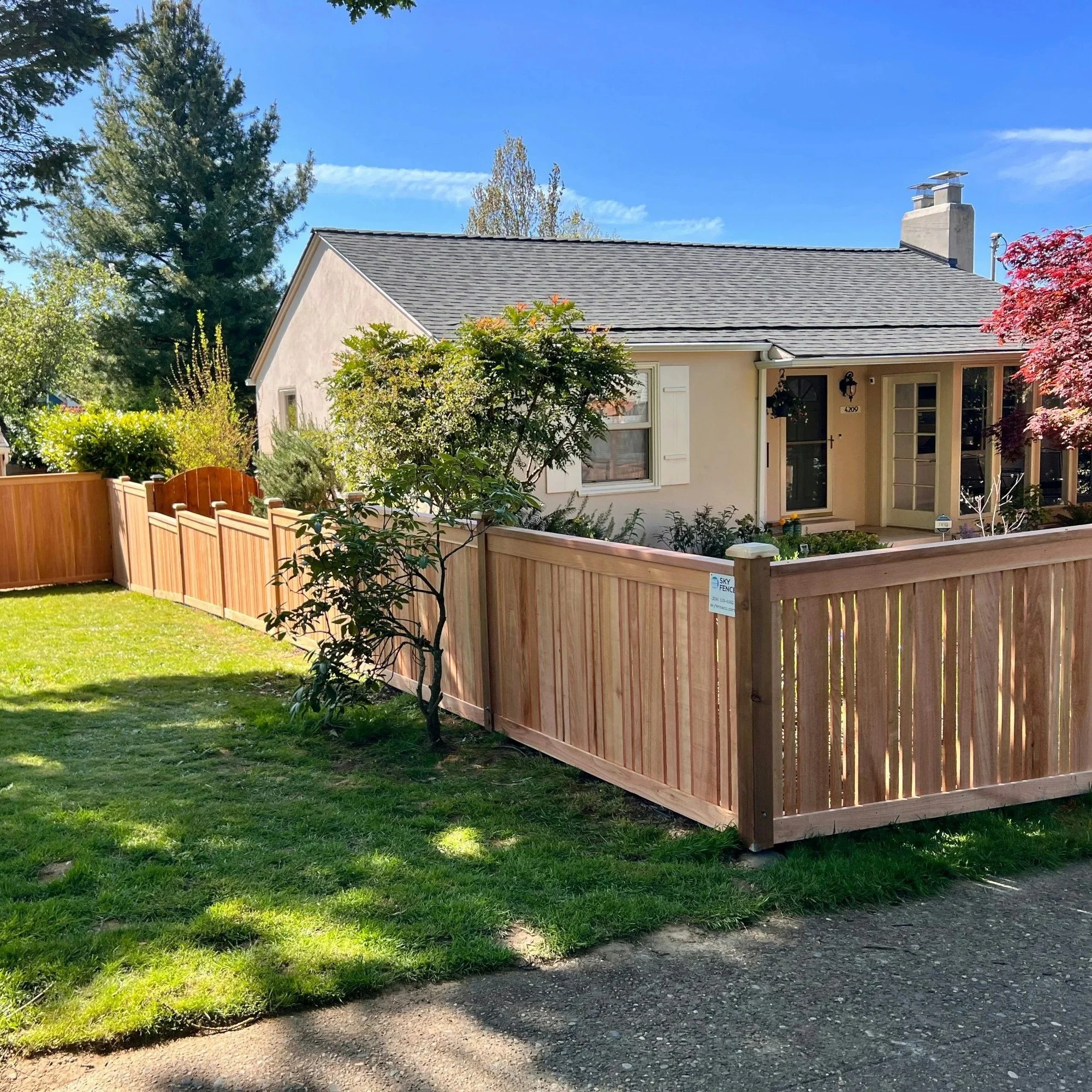
Fresh wooden privacy fence surrounding residential yard, showcasing durable cedar and pressure-treated pine fencing options for humid North Carolina climates.
If you are picking between a cedar fence and a pressure-treated pine fence for your Fayetteville home, the lifespan gap is the whole game. Cedar lasts roughly twice as long as pressure-treated pine in Cape Fear humidity. The price gap is real, but so is the longevity gap, and over 20 years, the math usually flips. Whether cedar’s premium pays off comes down to how long the homeowner stays in the house, where the fence sits, and how much maintenance actually happens.
The Bottom Line First
A well-installed cedar fence in the Cape Fear region runs 15 to 30 years. A well-installed pressure-treated pine fence runs 10 to 15. Those are industry ranges, not vendor claims, and they assume a proper installation with concrete footings and decent hardware. Skip those, and either fence will fail early.
Cedar costs more upfront. Industry pricing typically runs $25 to $40 per linear foot installed for cedar versus $15 to $25 for pressure-treated pine. For a typical 200-foot residential run, that works out to a $2,000 to $3,000 difference at installation.
Run the numbers over 20 years, and the picture changes. Pine usually needs replacement around year 12. Cedar often makes it to year 22 without replacement. The pine homeowner pays for installation twice in the same window, the cedar homeowner pays once. Cedar wins on total cost most of the time, but not always.
That gap is the focus here. Some homeowners come out ahead picking pine. Most do not, but it is worth knowing which side of the line your project falls on.
How Each Wood Holds Up to Cape Fear Humidity
Cedar has a built-in defense system. Western red cedar contains natural oils, including thujaplicin and tannins, that resist rot, insects, and decay without any chemical treatment. The wood evolved in the wet Pacific Northwest. Humidity is the climate it was built for.
Pressure-treated pine takes a different approach. Since 2003, the standard treatments have been ACQ (alkaline copper quaternary) or copper azole, both forced into the wood under pressure. CCA, the older treatment, was phased out for residential use over arsenic concerns. The newer treatments work, especially in the first decade.
Both woods do their job. They just fail differently in this climate.
Year by year, the difference becomes visible. At year 5, both fences look fine; cedar may have started weathering to a soft grey, while pine still looks close to fresh. By year 10, pine treatment is fading from the surface inward, while cedar is greyer, but the underlying wood is still sound. By year 15, pine often shows soft spots near the post bases or rotted bottom rails. Cedar typically has another 5 to 15 years left. By year 20, most pine fences in Fayetteville have been replaced, while plenty of cedar fences from the early 2000s are still standing in Fort Liberty-area neighborhoods, weathered but solid.
The True Cost of Each Material Over 20 Years
Sticker prices are the easy part to compare. The harder part is what each fence costs over the time you will actually own the home.
Industry pricing typically runs $25 to $40 per linear foot installed for cedar and $15 to $25 for pressure-treated pine. Quotes vary based on the installer, the property, the height, and how complex the gate situation is. The Fayetteville Fence Company LLC pricing falls inside those industry ranges; a real quote on a specific property is more accurate than a generic sticker price.
For a 200-foot residential fence, that pencils out to roughly $5,000 to $8,000 in cedar versus $3,000 to $5,000 in pine. Cedar’s premium runs $2,000 to $3,000 at install.
Now run the 20-year math. Pine averages 12 years, so a homeowner pays for the installation once at year 0 and again around year 12. The total 20-year cost lands closer to $7,500 to $10,000. Cedar averages 22 years, which means the homeowner pays once and remains within the lifespan curve at year 20. The total 20-year cost stays in the $5,000 to $8,000 range.
Cedar wins on total cost most of the time. The exception is when the homeowner is not staying in the home long enough for the second pine installation to happen. For a sale within five years, the $2,000 to $3,000 saved on pine matters more than the 20-year math the homeowner will never see play out.
Where Each Wood Fails First
Pine almost always fails at the post bottom. The pressure treatment protects the wood, but the post base sits in saturated Sandhills soil for years. Pine is porous, and the treatment leaches out from the bottom over time. The wood softens, rots, and the post fails. The above-ground wood often still looks fine when the post is already done.
Cedar’s failure pattern is almost the opposite. The cedar itself stays solid for a long time. What goes first is usually the hardware: screws rust, brackets corrode, gate hinges seize. Cedar outlasts standard hardware in Cape Fear humidity, which is why galvanized or stainless fasteners matter even more on a cedar fence than on a pine one.
That difference shapes the installation. With pine, post depth, and concrete footings do most of the work to extend the fence’s life. With cedar, the wood is going to last, so the planning happens around hardware grade. Pick fasteners that last as long as the wood does. Both jobs are real. Both are worth paying for.
Maintenance Required to Hit the Lifespan Numbers
The high-end lifespan numbers (30 years for cedar, 15 for pine) assume someone is sealing or staining the fence regularly. Most homeowners do not.
Cedar should be stained or sealed every 3 to 5 years to hold its color and slow UV weathering. Without it, cedar still lasts 15 to 20 years, but the silver-grey weathering happens faster, and the wood greys unevenly. The structural integrity stays. The look changes.
Pine should be sealed every 2 to 3 years. Pressure treatment alone will not get you to 15 years in Cape Fear humidity; sealant slows the leaching process and gives the treatment a fighting chance. Skipped maintenance brings pine closer to 10 years than 15.
Most homeowners skip the maintenance entirely. That is fine — both woods still outlast a poorly installed fence. But if you are paying cedar prices for cedar’s 30-year potential and you will never seal it, you are paying for a benefit you will not collect.
If your existing fence is already showing wear and you are not sure whether it is repairable or needs replacing, a fence inspection sorts that question out fast.
When Pressure-Treated Pine Actually Makes Sense
Cedar is not always the right answer. Saying otherwise would be dishonest.
Pine is the smarter buy in a few specific situations. When your budget is tight, and a 12-year fence is acceptable, pine costs less and gets you a working fence. When you are selling in five to seven years, you will never see the cedar payback; pine’s lower upfront cost wins. When the fence sits in a low-visibility location, like a rear property line or somewhere hidden by landscaping, cedar’s appearance advantage does not matter. Pine looks fine where nobody is evaluating curb appeal.
Pine also works well for short fences (three to four feet) on level ground. Lower fences face less wind load, hold less water on horizontal surfaces, and have less wood to lose to rot. A four-foot pine fence in a flat back yard is a different durability problem than a six-foot privacy fence on a slope.
Honest comparison does not always recommend the more expensive option. It points to the option that fits the situation.
The Verdict for Fayetteville Homeowners
For a homeowner planning to stay in their Fayetteville or Hope Mills home for 10 or more years, cedar usually wins on total cost. For shorter horizons, pressure-treated pine is the smarter spend.
For high-visibility front-yard installations or pool-area fencing, cedar’s appearance and weather resistance pay off. For utility fencing, dog runs, or rear-property installations, pine is fine.
The biggest variable is not the wood. It is the installation. A poorly installed cedar fence will fail in 8 years. A well-installed pine fence will last its full 12 to 15. The wood you pick matters; how it is installed matters more.
If you are already planning a full fence replacement and weighing the wood choice, the conversation starts with how long you are staying in the house, then moves to what the fence needs to do for you visually, and only then gets to the material.
Frequently Asked Questions
15 to 30 years for a well-installed cedar fence in Cape Fear humidity. The high end requires periodic staining. Without maintenance, plan on the lower-to-middle of that range. The biggest variable is installation quality, especially post depth and hardware grade.
Yes, faster than in drier regions. Cape Fear humidity, plus saturated Sandhills soil at the post base, accelerates the leaching of the chemical treatment. Pine that lasts 18 to 20 years in dry inland states often comes in at 10 to 15 years here.
It depends on the length of ownership. For 10 or more years, cedar usually pays back. Under 7 years, pine’s lower upfront cost almost always wins. The break-even sits in the 8 to 10-year range for most properties.
Every 3 to 5 years, to keep cedar at its full lifespan and consistent color. Cedar still works untreated; it just weathers faster and may grey unevenly.
Yes, with semi-transparent stain in cedar tones. The look is not identical, but it is close, and it costs less than cedar even after factoring in the stain. The catch is that stained pine still has pine's lifespan; you are paying for appearance, not longevity.
The wood choice matters, but it is not what makes or breaks the fence. Whichever wood gets picked, the installation is what determines how many years the fence actually delivers. Cedar that goes in shallow with cheap hardware will fail before pine that goes deep in concrete with stainless fasteners. Pick the wood that fits your budget and timeline; pay for the installation that fits the wood.
Trying to decide between cedar and pressure-treated pine for your Fayetteville home? The Fayetteville Fence Company LLC offers free estimates on both, with 12-month warranties on every installation. Call (910) 994-3634 to schedule.
