
Cedar vs Pressure-Treated Pine for NC Humidity
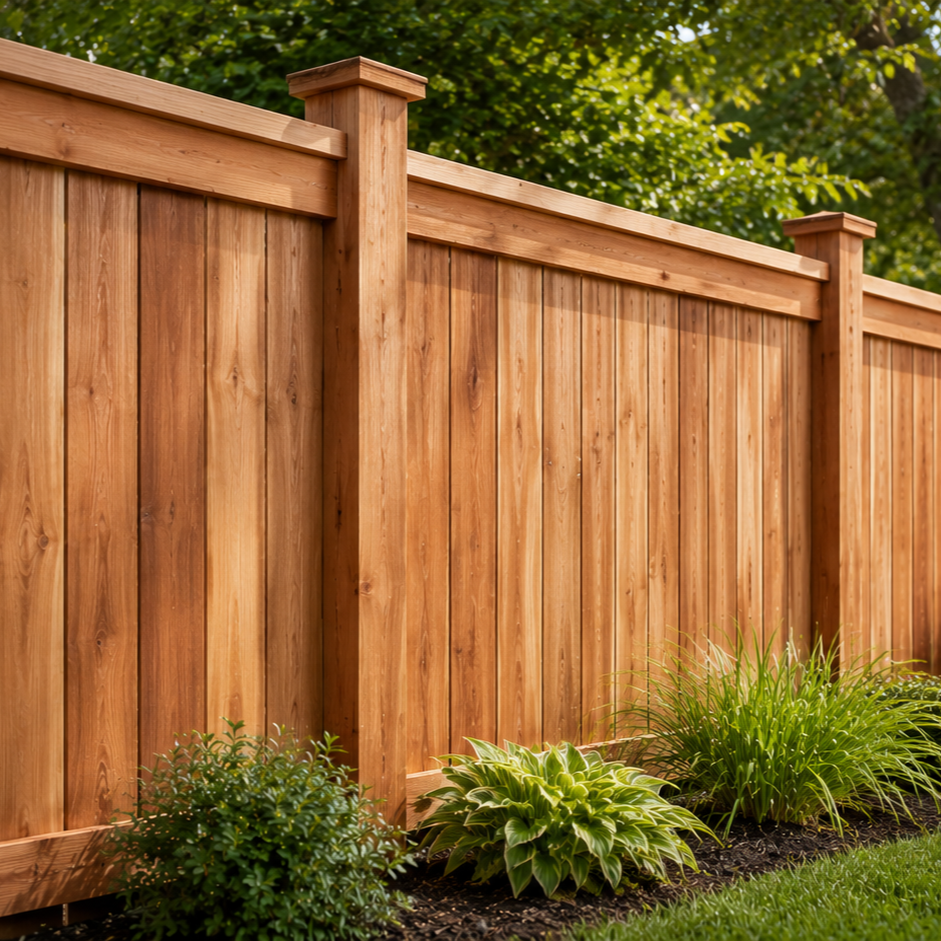
Quick Answer: For a wood fence in humid North Carolina, the two common choices are cedar and pressure-treated pine. Cedar has natural oils that resist rot, decay, and insects, holds up well without chemical treatment, resists warping, and has an attractive natural appearance — but it generally costs more. Pressure-treated pine is chemically treated to resist rot and insects, making it durable against moisture and a budget-friendly, widely used option, though it's more prone to warping, cracking, and shrinking as it dries and benefits from maintenance. Both can perform well in humidity; cedar offers natural beauty and stability at a higher cost, while pressure-treated pine offers strong moisture protection and value. The choice comes down to budget, looks, and maintenance preference.
When building a wood fence in North Carolina's humid climate, choosing the right wood matters because moisture is the enemy of wood, and rot is the main threat. The two most common choices are cedar and pressure-treated pine, and each handles humidity in its own way. Understanding how they compare in rot resistance, cost, appearance, and maintenance helps you choose the wood that best fits your fence and priorities.
Why the Wood Choice Matters in Humidity
In a humid climate, a wood fence is constantly exposed to moisture, which drives rot and decay — the primary way wood fences fail. So the wood's resistance to rot and moisture is a central consideration. Cedar and pressure-treated pine both offer rot resistance, but they achieve it differently: cedar through its natural properties, and pressure-treated pine through chemical treatment. That difference, along with cost, appearance, and how each behaves over time, shapes the comparison. Choosing a wood that resists humidity is key to a fence that lasts in North Carolina.
Cedar: Natural Rot Resistance
Cedar is prized for its natural durability. It contains natural oils and properties that resist rot, decay, and insects without needing chemical treatment, which makes it well-suited to humid conditions. Cedar also tends to be more dimensionally stable — it resists warping and shrinking better than many woods — so it holds its shape well over time. And it has an attractive, natural appearance with a warm color and pleasant grain that many people love. The main trade-off is cost: cedar generally costs more than pressure-treated pine. So cedar offers natural rot resistance, stability, and beauty at a higher price point, appealing to those who want a premium, low-treatment wood that handles humidity naturally.
| Factor | Cedar | Pressure-Treated Pine |
|---|---|---|
| Rot resistance | Natural oils resist rot/insects | Chemically treated to resist |
| Stability | Resists warping/shrinking | More prone to warping/cracking |
| Appearance | Natural, warm, attractive | Utilitarian; can be stained |
| Cost | Higher | Lower, budget-friendly |
| Treatment | None needed naturally | Chemically treated |
Pressure-Treated Pine: Treated for Durability
Pressure-treated pine is pine that's been chemically treated to resist rot and insects, giving it greater moisture resistance than untreated pine. This treatment makes it suitable for humid conditions and in-ground use, helping it withstand the moisture that causes rot. It's also widely available and budget-friendly, which is a big reason it's one of the most common fencing woods. The trade-offs: pressure-treated pine is more prone to warping, cracking, and shrinking as it dries out over time, so it can move and check more than cedar, and it benefits from maintenance like sealing or staining to look its best and last. So, pressure-treated pine offers strong moisture protection and excellent value, but it tends to warp more and requires more upkeep than cedar.
How They Compare in NC Humidity
Both cedar and pressure-treated pine can resist rot in North Carolina's humidity — cedar through its natural oils, pine through chemical treatment. The differences show up elsewhere. Cedar's natural stability means it resists the warping, cracking, and shrinking that pressure-treated pine is more prone to, so cedar tends to hold its appearance and shape better over time. Pressure-treated pine, while more prone to movement, delivers reliable rot resistance at a lower cost. Both benefit from proper installation and some maintenance, though cedar's natural properties mean it needs less chemical protection. So in humidity, both resist rot effectively; cedar adds stability and natural beauty at a premium, while pressure-treated pine provides solid, treated durability at a value price.
Whichever wood you choose, pay attention to the posts and good installation, since the posts in the ground face the most moisture and rot. Using properly rated wood for ground contact and ensuring good drainage around the posts matters as much as the wood choice for how long the fence lasts in humidity.
How to Choose
The decision comes down to your priorities. Choose cedar if you want natural rot resistance, better dimensional stability (less warping and cracking), and an attractive natural appearance, and the higher cost fits your budget — it's the premium choice that handles humidity through its own properties. Choose pressure-treated pine if you want strong, moisture-resistant protection at a budget-friendly price and don't mind a bit more maintenance and a tendency to warp — it's the value choice that's reliably durable against rot. Consider your budget, how much you value cedar's natural looks and stability, and your maintenance preference. Both are capable fence woods for NC humidity; a fencing professional can help you weigh them and recommend the right wood and installation for your fence.
Frequently Asked Questions
Both resist rot well in humidity — cedar through its natural oils, pressure-treated pine through chemical treatment — so both can perform well. The differences are elsewhere: cedar offers better stability (less warping and cracking) and natural beauty at a higher cost, while pressure-treated pine offers reliable moisture protection at a budget-friendly price with more tendency to warp. Neither is universally better; it depends on your priorities.
Cedar contains natural oils and properties that resist rot, decay, and insects without needing chemical treatment. This natural resistance is what makes cedar well-suited to humid conditions. It's a built-in property of the wood, unlike pressure-treated pine, which relies on chemical treatment to achieve its rot resistance. Cedar's natural oils are a key reason it's prized for durability in moist climates.
Yes. Pressure-treated pine is chemically treated specifically to resist rot and insects, giving it durability against moisture that untreated pine wouldn't have. This treatment makes it suitable for humid conditions and in-ground use, helping it stand up to the moisture that causes rot. It's a reliable, budget-friendly choice for rot resistance, though it's more prone to warping and benefits from maintenance.
Cedar generally costs more than pressure-treated pine. Pine's lower cost and wide availability are big reasons it's one of the most common fencing woods. Cedar's higher price reflects its natural rot resistance, stability, and appearance. So the choice balances cedar's premium qualities against pressure-treated pine's value, depending on your budget and how much you prioritize cedar's natural benefits.
Pressure-treated pine is more prone to warping, cracking, and shrinking as it dries out over time, so it can move and check more. Cedar is more dimensionally stable and resists warping and shrinking better, holding its shape over time. So if minimizing warping is a priority, cedar has the edge, while pressure-treated pine's tendency to move is a trade-off for its lower cost.
Both benefit from proper installation and some maintenance, though cedar's natural properties mean it needs less chemical protection. Pressure-treated pine especially benefits from sealing or staining to look its best and last, given its tendency to warp and check. Sealing or staining either wood helps protect it and maintain its appearance. So, while cedar is naturally lower maintenance, both fences last longer with care in a humid climate.
Both Resist Rot — Stability and Cost Decide
For a wood fence in NC humidity, cedar and pressure-treated pine both resist the rot that moisture causes — cedar naturally, pine through treatment. Cedar adds better stability and natural beauty at a higher cost, while pressure-treated pine offers reliable, treated durability at a budget-friendly price with more tendency to warp. Choose based on your budget, how much you value cedar's looks and stability, and your maintenance preference — and pay attention to the posts and good installation either way.
Choosing the right wood for your NC fence? — Get guidance on cedar versus pressure-treated pine and proper installation. The Fayetteville Fence Company LLC serves Fayetteville, Hope Mills, Raeford. Call (910) 994-3634.
