
How to Choose the Right Fence for Privacy
Quick Answer: Choosing a privacy fence comes down to a few key factors: height (taller blocks more sightlines, within local limits), a solid design with no gaps between boards so no one can see through, and a material that suits your priorities for looks, maintenance, and durability. Common privacy fence materials include wood (natural, classic, needs maintenance), vinyl (low-maintenance, durable), and composite. Also consider your budget, the maintenance you're willing to do, your climate, the style and appearance you want, and any local rules or HOA requirements on height and type. The right privacy fence balances enough height and a solid, gap-free design with a material and style that fit your home, budget, and upkeep preferences.
A privacy fence does exactly what the name says — it blocks views into your yard and creates a private, enclosed space. But "privacy fence" covers a lot of options, and choosing the right one means thinking through several factors so it actually delivers the privacy and look you want. Here's how to choose a privacy fence that fits your home and your needs.
Height: The First Privacy Factor
The most fundamental factor for privacy is height. A taller fence blocks more sightlines, keeping people from seeing over it into your yard, while a shorter fence offers less privacy. Privacy fences are typically built tall enough to block views, but the right height depends on what you are trying to block and your situation. Importantly, height is often limited by local rules — many areas and HOAs have maximum fence heights — so you'll want to choose a height that provides the privacy you want within those limits. Getting the height right is the starting point, since a fence that's too short won't deliver the privacy you want, no matter how solid it is.
A Solid, Gap-Free Design
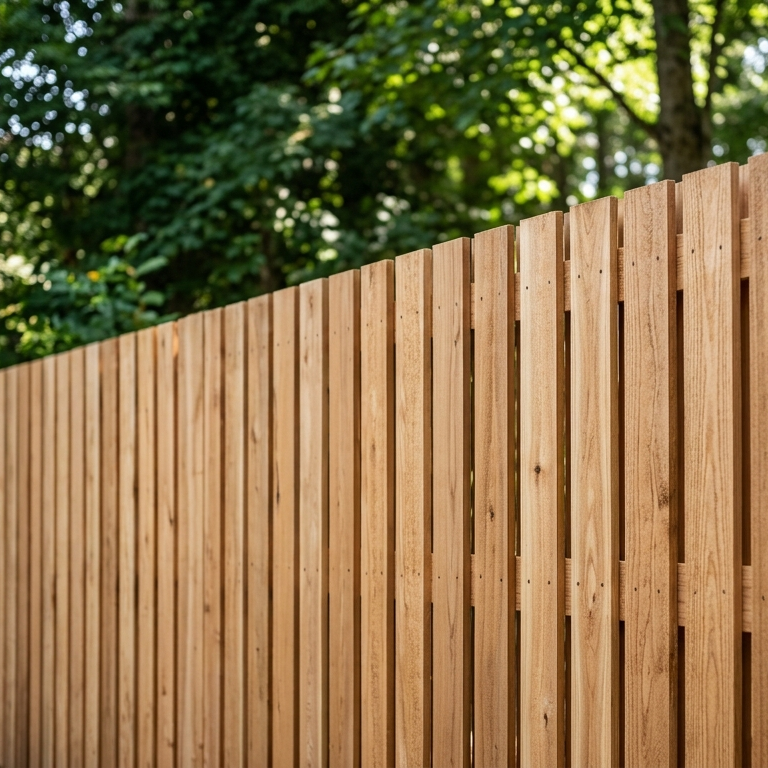
Just as important as height is the design — specifically, that it's solid with no gaps. For true privacy, the boards should be placed side by side with no spaces between them, so no one can see through the fence. A fence with gaps between the boards, however tall, lets people see into the yard, undermining the privacy. So a privacy fence design is a solid panel of boards with no see-through gaps. Some styles, like board-on-board (where boards overlap), ensure no gaps even as the wood expands and contracts. The key is that the design blocks the view completely, which is what separates a privacy fence from a more open decorative fence.
| Privacy factor | What to consider |
|---|---|
| Height | Taller blocks more views, within local limits |
| Solid, gap-free design | No spaces between boards to see through |
| Material | Wood, vinyl, composite — looks/maintenance/cost |
| Maintenance | How much upkeep you'll do |
| Climate | Material's durability in your conditions |
| Local rules/HOA | Height and type requirements |
Choosing the Material
Privacy fences come in several materials, and the choice affects looks, maintenance, durability, and cost. Wood is a classic, natural-looking choice that's popular for privacy fences, offering warmth and a traditional appearance, but it needs regular maintenance (sealing or staining) to resist moisture and last. Vinyl is a low-maintenance, durable option that resists rot and moisture and doesn't need painting or staining, though it costs more upfront. Composite is another low-maintenance, durable option. So the material decision balances the natural look and lower cost of wood against the low-maintenance durability of vinyl or composite. Your climate matters here too — in a humid or harsh climate, a material's resistance to moisture and the elements affects how well it holds up. Choosing a material suited to your priorities and conditions is a big part of getting the right privacy fence.
Other Factors to Weigh
Beyond height, design, and material, a few more considerations shape the choice. Your budget naturally affects the material and scope. The maintenance you're willing to do should guide the material — wood needs upkeep, vinyl and composite need little. Your climate affects which material lasts best. The style and appearance you want — the look that fits your home and yard — matters for satisfaction. And local rules or HOA requirements on fence height, material, and type can constrain or guide your choices, so it's worth checking those before you decide. Weighing all of these together leads to a privacy fence that not only blocks views but fits your home, budget, upkeep preferences, and any rules you need to follow.
Check your local rules and HOA requirements before settling on a height and style. Many areas limit fence height, and HOAs may have specific requirements for materials and appearance. Knowing those constraints up front ensures the privacy fence you choose is both effective and allowed, avoiding the headache of building something you have to change.
Bringing It Together
The right privacy fence balances several factors: enough height to block views (within local limits), a solid, gap-free design so no one can see through, and a material and style that fit your priorities for looks, maintenance, durability, and cost. Add in your budget, climate, and any local or HOA rules, and you can choose a fence that delivers real privacy and suits your home. Because there are several considerations and material trade-offs, a fencing professional can help you weigh them, recommend the right height, design, and material for your situation, and ensure the fence meets local requirements. The result is a private, enclosed yard with a fence that fits your home and needs.
Frequently Asked Questions
A privacy fence is built to block views into your yard, with two key features: enough height to keep people from seeing over it, and a solid design with no gaps between the boards so no one can see through it. Together, these create a private, enclosed space. A taller, solid, gap-free fence delivers privacy, unlike a shorter or more open fence that lets views through.
Tall enough to block the views you want to block, but within local limits — many areas and HOAs set maximum fence heights. Privacy fences are typically built tall enough to prevent people from seeing over them, but the right height depends on your situation and what you're blocking. The goal is to choose a height that provides the privacy you want within the allowed limits, so check local rules first.
It depends on your priorities. Wood offers a natural, classic look and a lower upfront cost, but needs regular maintenance. Vinyl is low-maintenance and durable, resisting rot and moisture, but costs more upfront. Composite is another low-maintenance, durable option. The best material balances the look you want, the maintenance you'll do, your climate, and your budget. There's no single best — it's about fit for your situation.
Yes. For true privacy, the boards should be placed side by side with no spaces between them, so no one can see through the fence. A fence with gaps, however tall, lets people see into the yard, undermining the privacy. Solid, gap-free designs — including board-on-board styles that overlap to prevent gaps — are what make a privacy fence actually private.
Yes, it's important. Many areas and HOAs have rules on fence height, material, and type, which can limit or guide your choices. Checking these before you decide ensures the privacy fence you choose is both effective and allowed, avoiding the problem of building something you have to modify or remove. Knowing the constraints up front lets you plan a fence that works and complies.
Weigh the key factors: height (enough to block views, within local limits), a solid gap-free design, and a material that fits your priorities for looks, maintenance, durability, and cost. Then consider your budget, climate, the style you want, and any local or HOA rules. Balancing these leads to a fence that delivers privacy and suits your home. A fencing professional can help you weigh them and recommend the right choice.
A Private Yard Starts With the Right Choices
Choosing the right privacy fence means getting the fundamentals right — enough height to block views within local limits, and a solid, gap-free design so no one can see through — then picking a material and style that fit your priorities for looks, maintenance, durability, and budget. Factor in your climate and any local or HOA rules, and you'll end up with a fence that delivers real privacy and suits your home. Weighing these together is the key to a private, enclosed yard.
Want a privacy fence done right? — Get help choosing the height, design, and material that fit your home and rules. The Fayetteville Fence Company LLC serves Fayetteville, Hope Mills, Raeford. Call (910) 994-3634.
