
Signs Your Fence Needs Repair or Replacement
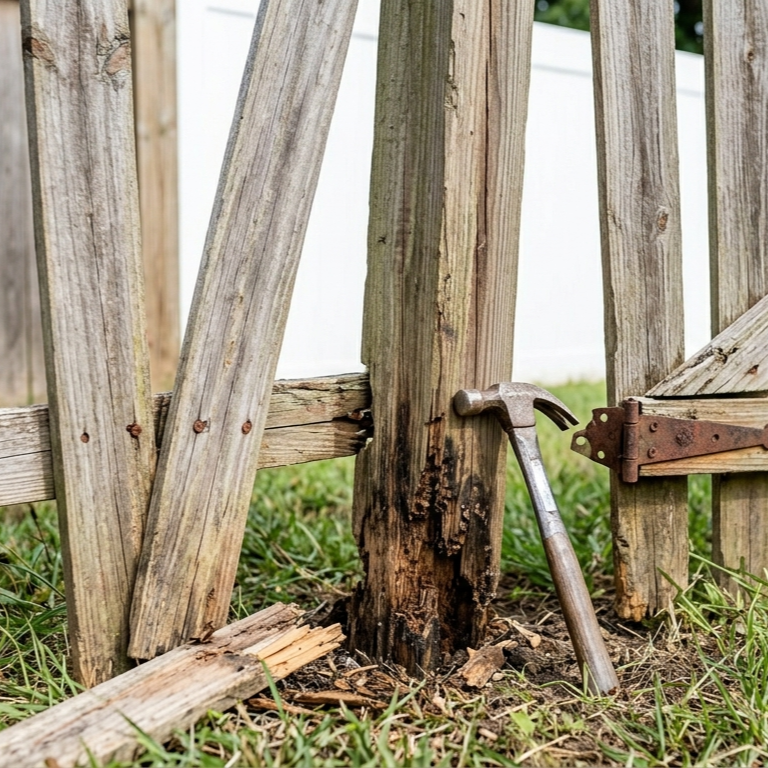
Quick Answer: Signs a fence needs attention include leaning or sagging sections, rotted or soft wood (especially at the posts), loose or wobbly posts, broken or missing boards or pickets, rusted or damaged hardware, and a fence that's simply old and worn. Whether you need a repair or full replacement depends on how widespread the damage is and the overall condition. Isolated damage — a few broken boards or one bad post — on an otherwise sound fence is usually a repair. Widespread rot, multiple leaning or failing sections, extensive damage, or a fence near the end of its life point to replacement. Catching the signs early, especially rotting posts, lets you address problems before a section falls.
A fence does its job quietly until it starts showing its age or storm damage. Recognizing when a fence needs attention — and whether that means a repair or a full replacement — helps you keep your property secure and looking good without overspending. Fences give clear warning signs as they wear, and catching them early often means a simpler fix. Here are the signs to watch for and how to tell repair from replacement.
The Warning Signs
A fence in need of attention shows several recognizable signs. Leaning or sagging sections indicatethat the posts or structure are failing. Rotted, soft, or crumbling wood — especially at the posts where they meet the ground — signals decay. Loose or wobbly posts mean the anchoring is compromised. Broken, cracked, or missing boards and pickets are visible damage. Rusted, broken, or failing hardware (hinges, fasteners) affects gates and connections. And a fence that's simply old, weathered, and worn throughout signals it's nearing the end of its service life. Any of these means the fence needs to be evaluated for repair or replacement.
| Sign | What it indicates |
|---|---|
| Leaning or sagging sections | Failing posts or structure |
| Rotted or soft wood at posts | Decay; posts weakening |
| Loose or wobbly posts | Compromised anchoring |
| Broken or missing boards/pickets | Visible damage |
| Rusted or failing hardware | Affects gates and connections |
| Old, worn fence overall | Nearing end of lifespan |
Repair vs. Replacement: The Principle
Once you spot signs of trouble, the question is repair or replace. The guiding principle is the extent of the damage and the overall condition and age of the fence. Isolated, localized damage on a fence that's otherwise sound is usually a repair — fixing the specific problem restores the fence. But widespread damage, extensive rot, multiple failing sections, or a fence near the end of its life point toward replacement, because fixing one part of a failing fence leaves the rest to go. So it's not just what's damaged, but how much of the fence is affected and its overall condition.
When a Repair Makes Sense
A repair is the right call when the damage is limited, and the rest of the fence is in good shape. Good candidates include a few broken or missing boards, a single rotted or leaning post, damaged hardware, or damage confined to one section, while the rest of the fence is sound and has life left. In these cases, replacing the broken boards, resetting or replacing the bad post, or fixing the hardware restores the fence without the cost of full replacement. The key is that the overall fence is still in good condition, so addressing the isolated problem solves it, and the rest continues to perform.
When Replacement Is the Answer
Replacement becomes the better choice when the damage or wear is widespread. Several situations point this way: extensive rot throughout the fence, multiple leaning or failing sections, widespread broken or missing boards, or a fence that's simply old and worn out across the board. In these cases, repairing one part is a losing game because the rest of the fence is also failing, and new problems will keep appearing. A fence that's reached the end of its life, or is extensively damaged, is better replaced to give you a sound, secure, good-looking fence rather than a patchwork that keeps failing. When you find yourself repairing the same fence repeatedly, that's a strong sign it's time to replace it.
Pay special attention to the posts, since they fail first and cause leaning. Push on posts and check the wood at the ground line for rot. A few rotted posts on an otherwise good fence may be a repair, but widespread post rot usually means the whole fence is near the end and replacement is the more lasting fix.
Why Acting Early Matters
Addressing fence problems promptly matters because they tend to worsen and spread. A rotting post leads to a leaning section, which can stress and pull on neighboring sections; a small area of damage can grow. Catching the signs early — a rotting post, a few broken boards, a section starting to lean — lets you make a targeted repair before the damage spreads or a section falls. It also lets you make the repair-or-replace decision deliberately rather than after the fence fails. Because the right call depends on assessing the extent of the damage and the fence's overall condition, a fencing professional can evaluate your fence and recommend whether a repair or replacement makes more sense, addressing it before a bigger problem develops.
Frequently Asked Questions
Signs include leaning or sagging sections, rotted or soft wood (especially at the posts), loose or wobbly posts, broken or missing boards or pickets, rusted or failing hardware, and a fence that's old and worn throughout. Any of these means the fence needs evaluation. Whether it's a repair or a replacement depends on the extent of the damage and the fence's overall condition.
It depends on the extent of the damage and the fence's age and condition. Isolated damage — a few broken boards or one bad post — on an otherwise sound fence is usually a repair. Widespread rot, multiple leaning or failing sections, extensive damage, or a fence near the end of its life point to replacement, since fixing one part of a failing fence leaves the rest to go.
A repair is enough when the damage is limited, and the rest of the fence is in good shape — a few broken boards, a single rotted or leaning post, or damaged hardware, while the rest of the fence is sound with life left. Replacing the affected boards or posts or fixing the hardware restores the fence without a full replacement. The key is that the overall fence is still in good condition.
Replace when the damage or wear is widespread — extensive rot throughout, multiple leaning or failing sections, widespread broken boards, or a fence that's old and worn out. In these cases, repairing one part doesn't last because the rest is also failing. A full replacement gives you a sound, secure fence rather than a patchwork that keeps failing. Repeatedly repairing the same fence is a sign that it's time to replace it.
Because the posts anchor the fence, and they fail first, usually from rot at the base where they meet the ground. A rotted, weakened post can no longer support the fence, causing it to lean. So the condition of the posts often determines whether the fence is sound. A few bad posts on a good fence may be a repair, but widespread post rot usually signals the fence is near the end and needs replacement.
Promptly, because they tend to worsen and spread — a rotting post leads to a leaning section that can stress neighboring sections, and small damage can grow. Catching the signs early lets you make a targeted repair before the damage spreads or a section falls, and lets you decide on repair versus replacement deliberately rather than after a failure. Early action keeps a small problem from becoming a bigger one.
Catch the Signs, Make the Right Call
A fence signals when it needs attention — leaning sections, rotted wood at the posts, loose posts, broken boards, failing hardware, or general wear. Whether you need a repair or replacement comes down to how widespread the damage is and the fence's overall condition: isolated damage on a sound fence is a repair, while widespread rot or a worn-out fence calls for replacement. Catching the signs early, especially at the posts, lets you address problems before a section falls.
Fence leaning, rotting, or showing its age? — Get it evaluated for whether a repair or replacement makes sense. The Fayetteville Fence Company LLC serves Fayetteville, Hope Mills, Raeford. Call (910) 994-3634.
