
Why Do Wood Fences Rot and Lean Over Time?
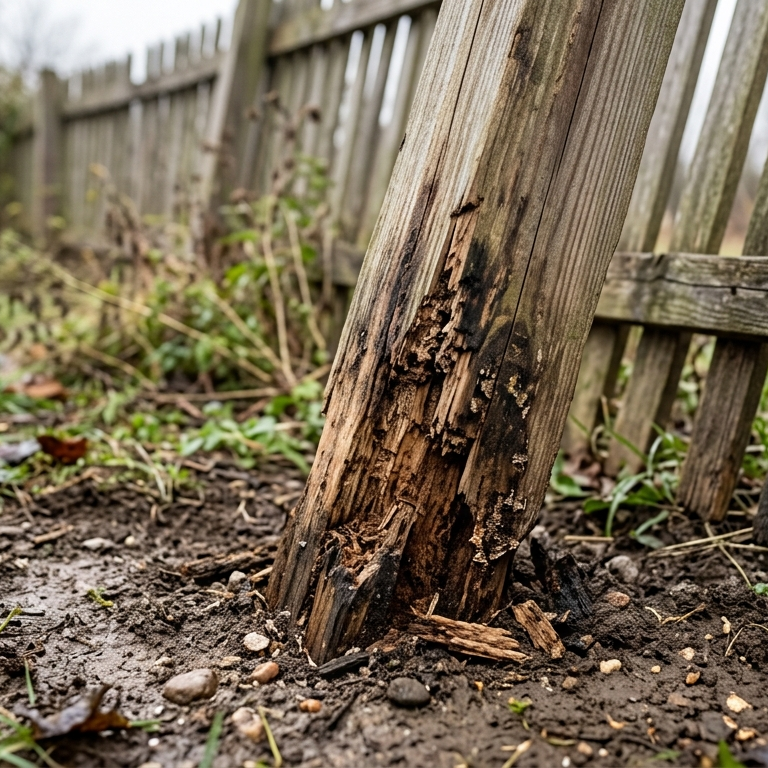
Quick Answer: Wood fences rot and lean over time mainly because of moisture, and the posts are usually where it starts. The posts sit in the ground where they're constantly exposed to soil moisture and water, and wood that stays wet rots — especially at and just below the ground line. As the post base rots and weakens, it can no longer hold the fence firmly, so the fence leans. Soil that shifts, becomes saturated, or heaves with moisture also lets posts move and lean. Other factors include sun and weather degrading the wood, insect damage, and lack of maintenance. Proper installation, drainage, sealing, and rot-resistant or treated wood help slow rot and leaning.
A wood fence starts out straight and solid, but over the years, many begin to rot and lean. It's a common pattern, and it almost always traces back to one thing: moisture, concentrated where the fence meets the ground. Understanding why wood fences rot and lean — and where it starts — helps you slow the process and keep a fence standing straight longer. Here's what's going on.
Moisture Is the Root Cause
The fundamental reason wood fences rot is moisture. Wood that's repeatedly or constantly wet is prone to rot, as the moisture allows decay to break down the wood fibers. A fence is exposed to rain, humidity, and ground moisture, and over time, that moisture works on the wood. In a warm, humid climate, there is ample moisture to promote rot. So rot isn't random aging — it's the result of moisture acting on the wood over time. And the place where moisture is most concentrated, and rot does the most damage, is at the posts.
Why the Posts Rot First
The posts are part of a wood fence that fails first, and it's because of where they live. Fence posts are set into the ground to anchor the fence, so the base of each post sits in soil that retains moisture. That constant exposure to ground moisture and water makes the post base — at and just below the ground line — the first and most vulnerable place for rot to take hold. While the pickets and rails above are exposed to weather, the posts are sitting in damp earth, which is the worst condition for wood. So rot typically starts at the post base, even when the rest of the fence still looks fine. This is the key to understanding why fences lean.
| Factor | Effect |
|---|---|
| Ground moisture at posts | Rots the post base first |
| Saturated or shifting soil | Lets posts move and lean |
| Rain, humidity, weather | Degrades wood over time |
| Insect damage | Weakens the wood |
| Lack of maintenance | Accelerates rot and decay |
Why the Fence Leans
Leaning follows directly from post rot. A fence stays upright because the posts are firmly anchored in the ground. As the base of a post rots and weakens, it loses its strength and grip, so it can no longer hold the fence firmly in place — and that section starts to lean. So the leaning you see is usually a symptom of rotted, weakened posts at the base. Soil conditions compound it: when the ground around the posts becomes saturated, shifts, or heaves with moisture, it loosens the posts' hold and lets them move, adding to the lean. So a leaning fence is typically telling you the posts have rotted, or the soil has let them shift — and once a post is compromised, the fence can't stay straight.
Other Contributing Factors
Beyond ground moisture and soil, a few other things contribute to a wood fence rotting and leaning. Sun and weather exposure degrade the wood over time, drying and weakening it, which works alongside moisture. Insect damage — wood-destroying insects attracted to wood, especially damp wood, weakens the structure further. And lack of maintenance accelerates everything: a fence that isn't sealed, stained, or maintained deteriorates faster, since the protection that helps it resist moisture is missing. These factors combine with the core moisture-and-posts issue to wear a fence down and bring on rot and leaning over time.
Check your fence posts by pushing on them and inspecting the base at the ground line. Soft, spongy wood or a post that wobbles means rot has set in at the base — the early sign that leaning is coming. Catching a rotting post early lets you address it before that section, and possibly its neighbors, starts to lean or fall.
How to Slow Rot and Leaning
Because moisture and the posts drive the problem, slowing rot and leaning focuses on those. Proper installation helps a lot — setting posts well and ensuring good drainage so water doesn't pool around the bases reduces the ground moisture that rots them. Using rot-resistant or properly treated wood gives the posts more resistance to decay. Sealing or staining the wood and keeping up with maintenance protects it against the moisture and weather that cause rot. And keeping vegetation and debris from holding moisture against the fence helps too. These steps don't make wood immune — in a humid climate, wood always faces moisture — but they meaningfully slow the rot and leaning, extending the fence's life. A fencing professional can advise on installation, drainage, and materials that help a wood fence last longer.
Frequently Asked Questions
Because of moisture. Wood that's repeatedly or constantly wet is prone to rot, as the moisture allows decay to break down the wood fibers. A fence is exposed to rain, humidity, and especially ground moisture at the posts, and over time, that moisture causes rot. In a humid climate, there's plenty of moisture to drive it. Rot is the result of moisture acting on the wood, concentrated most at the posts.
Because the posts sit in the ground, where the base is constantly exposed to soil moisture and water. That damp earth is the worst condition for wood, so the post base — at and just below the ground line — is the first and most vulnerable place for rot to take hold. While the pickets and rails are exposed to weather, the posts are sitting in moisture, which is why rot typically starts there.
Usually, because the posts have rotted and weakened at the base, they can no longer hold the fence firmly upright. As the post base rots, it loses its strength and grip, and that section leans. Soil conditions add to it — saturated, shifting, or heaving ground loosens the posts' hold and lets them move. So a leaning fence typically indicates rotted posts or soil that has caused them to shift.
You can slow it significantly, though wood always faces moisture in a humid climate. Proper installation with good drainage reduces ground moisture at the posts, rot-resistant or treated wood resists decay better, and sealing or staining plus regular maintenance protects the wood. Keeping vegetation and debris from holding moisture against the fence helps, too. These steps extend the fence's life by reducing the moisture that causes rot.
It contributes. When the ground around the posts becomes saturated and shifts or heaves with moisture, it loosens the posts' hold and lets them move, adding to the lean. Combined with rot weakening the post base, soil movement is a key reason fences lean. Proper post setting and good drainage help keep the soil from undermining the posts' anchoring.
Push on the post and inspect the base at the ground line. Soft, spongy, or crumbling wood, or a post that wobbles or moves, indicates rot has set in at the base. Sound wood is firm; rotting wood gives way. Checking the posts this way catches rot early — the warning sign that leaning is coming — so you can address it before the section leans or falls.
Moisture and Posts Are the Story
Wood fences rot and lean over time because moisture acts on the wood, and the posts — sitting in damp ground — rot first at the base. As the post base weakens, it can't hold the fence, so it leans, with shifting or saturated soil adding to it. Sun, insects, and lack of maintenance compound the wear. Proper installation, drainage, rot-resistant wood, and sealing slow the process, helping a wood fence stand straight and solid longer.
Wood fence rotting or starting to lean? — Get the posts checked and the fence repaired or properly reset before it falls. The Fayetteville Fence Company LLC serves Fayetteville, Hope Mills, Raeford. Call (910) 994-3634.
