
Chain Link vs Aluminum Fence: Which Fits Your Yard?
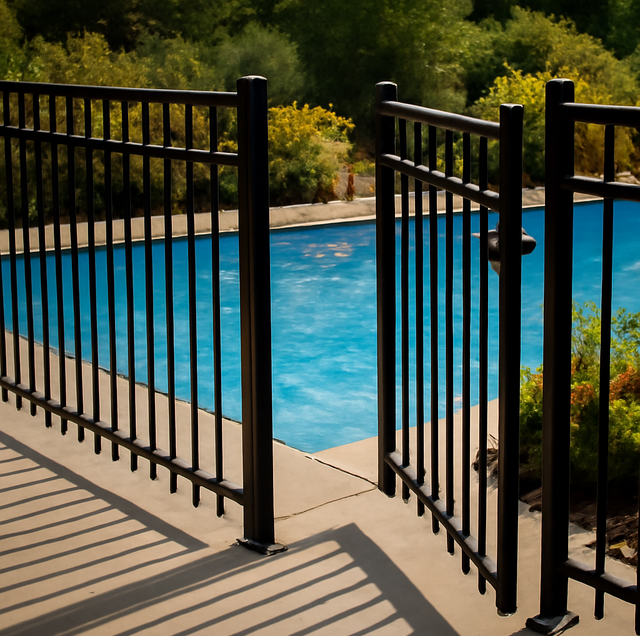
Quick Answer: Chain link wins on plain containment for dog runs, back yards, and large open areas. Aluminum wins where looks, a pool enclosure, an HOA, or long-term rust resistance matter. The right pick depends less on the material and more on what the fence has to do.
Ask two neighbors why they chose the fence they did, and you will get two different answers, both correct. One wanted to keep a dog in the backyard without spending on something the dog would never appreciate. The other wanted a front-yard line that looks like wrought iron but does not bleed rust down the pickets after a few wet summers. Chain link and aluminum sit at opposite ends of that decision, and picking between them comes down to matching the fence to the job rather than chasing whichever one looks better in a photo.
Here is how the two compare on the things that actually decide it: how they look, what they are good at, how they hold up, and how they behave around a pool, on a slope, and in wind and wet weather.
What Each One Actually Looks Like
Chain link is a woven diamond mesh strung between line posts and held tight by a top rail and tension wire. The bare version is galvanized steel with that familiar silver, utilitarian look. The upgrade is a vinyl-coated mesh, usually black or dark green, where the coating both softens the appearance and adds a layer of rust protection. Black vinyl-coated chain link has a way of visually receding into a tree line or shrub row, so it reads far less industrial than raw galvanized.
Aluminum is a different animal. It is built from powder-coated pickets and rails assembled into rigid panels, styled to mimic the ornamental look of old wrought iron without the weight or the rust. The powder coat is baked on, most often in black or bronze, and gives a clean architectural line that suits a front yard or a formal garden. If curb appeal is high on your list, aluminum simply looks like more fence. Chain link never pretends to be decorative, and in the places it usually goes, it does not need to be.
What Each One Is Built To Do
The clearest way to choose is to name the fence's real job.
Chain link is a containment specialist. It excels at fencing large areas, back and side yards you do not see from the street, dog runs, ball fields, and any spot where the goal is a secure boundary without ceremony. Because the mesh is open, it casts little shadow and does not catch the wind the way a solid panel does, which is part of why it dominates sports fields and large commercial lots.
Aluminum earns its place where the fence is part of the view. Front yards, pool enclosures, and decorative security lines around a property all suit it, and it is the usual answer in neighborhoods with an HOA that has opinions about what fencing may face the street. The rigid ornamental panels give a defined, finished edge that a mesh fence cannot match.
| Decision driver | Chain link | Aluminum |
|---|---|---|
| Curb appeal | Utilitarian; better in black vinyl-coated | Ornamental, mimics wrought iron |
| Best use | Dog runs, back yards, large or sports areas | Front yards, pools, decorative security |
| Rust resistance | Galvanized can rust at cut ends over decades | Will not rust; powder coat can chip |
| Pool suitability | Not the go-to on its own | Standard choice for pool enclosures |
| Privacy | Low; accepts slats or screen | Low; needs added panels or plantings |
| On a slope | Follows ground contour easily | Rackable panels step with the grade |
Maintenance and the Rust Question
Neither fence rots, which already puts both ahead of wood in a humid climate. Where they part ways is corrosion.
Galvanized chain link is steel protected by a zinc coating, and that coating does most of the work of holding rust off. The weak points are the cut ends, the places where the wire was clipped during installation, and simple age. Over enough wet years, the coating thins, and you may see rust bloom first at those cut ends and worn spots. Vinyl-coated mesh adds a second barrier over the zinc, which is why it tends to outlast bare galvanized mesh in damp settings.
Aluminum sidesteps the whole problem. Aluminum does not rust the way steel does, because the metal forms its own thin protective oxide layer instead of the flaking iron oxide that eats steel. In a place where the air is humid for months at a stretch, that is a real, practical advantage, not a sales line. The one honest caveat is the powder coat: if it gets chipped down to bare metal by a mower or a dropped tool, that spot can oxidize and look dull, though it will not corrode through the way steel does. Manufacturers often advertise long powder-coat warranties, and those are worth reading closely, since coverage and real-world fade over decades are not always the same thing.
Fencing a Pool
If a pool is anywhere in the plan, this comparison narrows fast. Aluminum is the standard choice for pool enclosures, and for reasons that go beyond looks.
Pool fencing has to do two jobs at once: keep a small child from getting through or over it, and do so reliably every single time the gate closes. Aluminum handles both. The vertical pickets sit close together, with spacing kept narrow (generally under four inches) so a child cannot slip between them, and a smooth-faced ornamental panel offers little for a foot to grab, making it hard to climb. Just as important, aluminum pool gates are built to be self-closing and self-latching, so the gate swings shut and latches on its own rather than relying on someone to remember to close it.
Chain link is not a natural pool fence. The diamond mesh gives small toes an easy foothold, which makes it climbable, and it lacks the clean, non-climbable face that makes aluminum the default here. Pool safety requirements vary by locality, so confirm what applies before you build, but in practice, the ornamental aluminum picket is what most pool yards end up with.
Strength, Security, and Slopes
Aluminum panels are rigid. That rigidity is why they hold a straight, defined line and why they handle grade changes well: quality aluminum panels are rackable, meaning the panel can flex at its brackets to step down a slope and follow the ground without leaving triangular gaps under each section. On a hilly lot, the fence is kept tight to the grade instead of floating above it.
Chain link takes a different approach to the same problem. Because the mesh is flexible, it simply follows the ground contour, bending over rises and dips without special panels. That flexibility is a strength on uneven terrain and a weakness on security: a mesh fence can be flexed, cut, or climbed more easily than a rigid picket line. You can shore up a chain link a great deal, though. A bottom tension wire keeps the mesh from being pushed up or pried loose, a smaller mesh opening and a heavier gauge wire make it harder to climb or cut, and a top rail keeps the whole run taut. Think of chain link like a bicycle chain and aluminum like a steel gate: the chain bends around whatever it meets, while the gate stays rigid and defined. Neither is wrong; they just solve the problem differently.
Privacy and How To Add It
Be clear-eyed here: neither of these is a privacy fence out of the box. Both are see-through by design, chain link through its mesh, and aluminum between its pickets.
You can add privacy to each, and the methods differ. Chain link takes privacy slats, thin strips woven vertically through the diamonds, or a wind-and-sight screen fastened to the mesh, both of which turn an open run into a solid-looking one. Aluminum does not accept slats, so privacy there comes from add-on panels made for the system or, more commonly, from landscaping: a row of evergreen shrubs or a climbing vine planted along the line fills in over a season or two. If full screening is the main goal, a solid wood or vinyl fence is honestly the better tool, and either of these is a compromise pressed into that role.
Which Handles Wind and Wet Weather
Two local forces decide a lot here: humidity and wind. Long stretches of damp air are hard on steel, which is where aluminum's freedom from rust pays off most, and it is a big reason aluminum holds its finish in humid or salt air while galvanized chain link slowly weathers at its cut ends. The heavy clay soil common in many yards holds water against posts, so on both fence types, the posts want to be well set and well drained, regardless of which mesh or panel they carry.
Wind is the two-sided part. In a hard blow, chain link's open mesh lets air pass straight through, so it catches very little of the load that would push against a solid panel, which is part of why it survives storms in exposed, open areas. Aluminum's pickets also let wind slip between them, giving it far less sail area than a privacy fence, while its rigid panels resist bending. Both do better in high wind than a solid privacy fence precisely because neither one acts like a sail, but each still depends entirely on posts set deep and firm enough to hold the line when the gusts come.
Frequently Asked Questions
Match the fence to the dog. Chain link is the common dog-run pick, but choose a smaller mesh opening for a small breed so paws cannot climb the diamonds, and add a bottom tension wire or a buried dig guard for a digger. Height matters for jumpers: a 4-foot run holds many dogs, while a determined jumper may need 5 to 6 feet. Aluminum works too, though a nose or paw can fit between pickets, so tighter spacing suits small dogs better.
It is the combination of a non-climbable face and a self-closing gate. Smooth ornamental pickets spaced narrowly (generally under four inches) give a child neither a foothold nor a gap to slip through, and aluminum pool gates are built to self-close and self-latch so the barrier is never accidentally left open. Chain link offers neither trait natively. Pool rules vary by locality, so confirm the specifics before building.
Aluminum does not rust the way steel does; it forms a thin, self-healing oxide film that re-seals if it gets scratched, rather than the flaking iron oxide that eats through steel, so it will not corrode through even in humid air. A chipped powder coat is only cosmetic, because the bare aluminum underneath still oxidizes instead of rusting. Galvanized chain link relies on a sacrificial zinc coating, and its cut ends and drilled holes rust first because the cut exposes bare steel; a quick pass of cold-galvanizing spray on those cuts at install slows it down, and vinyl-coated mesh adds a second barrier that delays it further.
Yes, but by different means. Aluminum uses rackable panels that flex at their brackets to step down the grade and follow the slope without gaps beneath each section. Chain link, because its mesh is flexible, simply bends to follow the ground contour with no special parts. On steep or uneven lots, both work, so the slope alone rarely determines which to use.
For chain link, weave privacy slats vertically through the mesh diamonds or attach a fabric wind-and-sight screen to the run. Aluminum will not take slats, so use manufacturer-add-on privacy panels or plant a living screen of evergreen shrubs or a climbing vine along the line, which will fill in over a season or two. For true full screening from day one, a solid wood or vinyl fence is a better tool than either of these.
On humidity, aluminum has the edge because it will not rust, while galvanized chain link weathers at its cut ends in damp air and picks up surface mildew that wants an occasional rinse. On wind, both beat a solid privacy fence because neither acts like a sail: the open mesh and the spaced pickets let air pass, so they catch far less storm load. They fail differently, though: a rigid aluminum panel mostly stays put, while chain link fabric can billow and stretch in repeated gusts, loosening the top rail and tension wire so it needs re-tensioning over the years. Either way, the real storm variable is the posts, which have to be set deep and firm in water-holding clay soil, since a heaved post topples any fence bolted to it.
Book a free on-site consultation — walk your yard with a fence pro who will match the material to your slope, pool, and view. The Fayetteville Fence Company LLC serves Fayetteville, Hope Mills, Raeford. Call (910) 994-3634.
