
Wood vs Vinyl vs Aluminum: Which Fence Costs Less Over 10 Years?
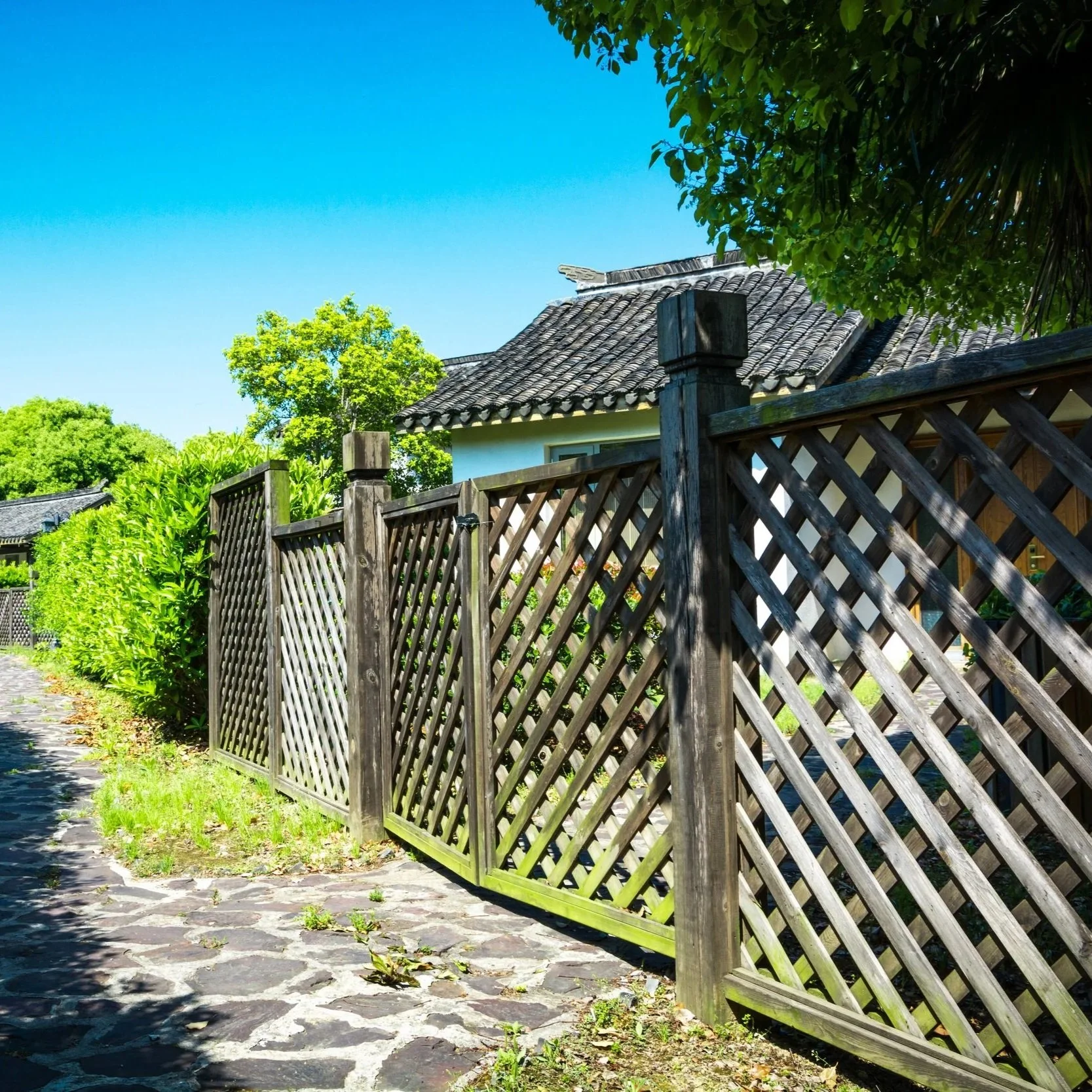
Decorative wooden lattice fence beside landscaped pathway showcasing residential fencing styles, material comparisons, and long-term ownership cost considerations.
If you are choosing between wood, vinyl, and aluminum for a new fence in Fayetteville, the upfront price is not the most important factor. Your real cost depends on how long the fence needs to last, what it is for, and how much maintenance it requires. Wood is cheapest at installation. Vinyl is the cheapest to maintain. Aluminum has been the cheapest for over 25 years. The right answer depends on how long you plan to stay in your home and how much maintenance you will actually do. Here is the real 10-year math for each material in Cape Fear humidity.
The Bottom Line First
Over 10 years in Cape Fear humidity, the math shakes out in three ways.
Pressure-treated pine is cheapest at year one and the most expensive by year ten. Maintenance every two to three years adds up, and pine often needs partial replacement within the 10-year window when the homeowner skips it.
Vinyl sits in the middle on upfront cost and at the bottom on maintenance. For a 10-year horizon, vinyl is usually the math winner: similar install cost to cedar, near-zero maintenance, no replacement needed inside the window.
Aluminum costs the most upfront but lasts 25 years or more with almost no maintenance. The 10-year cost is essentially the installation cost. The 25-year cost wins outright against everything else.
The right material depends on two questions, both addressed later. How long are you staying? Does your fence need to provide privacy? Most homeowners get to the right answer on those two alone.
Upfront Cost — What Each Material Runs Installed
Industry pricing for residential fences in the Cape Fear region falls in these ranges:
Pressure-treated pine: $15 to $25 per linear foot installed
Cedar: $25 to $40 per linear foot installed
Vinyl: $25 to $40 per linear foot installed
Aluminum: $30 to $50 per linear foot installed
For a typical 200-foot residential fence, that translates to roughly $3,000 to $5,000 for pressure-treated pine, $5,000 to $8,000 for cedar or vinyl, and $6,000 to $10,000 for aluminum.
Cedar and vinyl overlap exactly in upfront cost, which is the first surprise for most homeowners. The two materials look completely different and have very different maintenance profiles, but the install check is similar. Aluminum sits at the highest price because the material itself costs more, and the fabricated panels cost more than wood or vinyl extrusion.
The Fayetteville Fence Company LLC pricing falls within these industry ranges. Real quotes for your property vary by length, height, gate count, terrain, and whether an existing fence needs removal.
Lifespan in NC Humidity — How Long Each Material Lasts
Lifespan in Cape Fear humidity matters more than lifespan in mild climates. Coastal-influenced moisture, Sandhills soil that saturates after heavy rain, and hurricane-season storm exposure all age fences faster than dry inland states would.
Typical NC humidity ranges:
Pressure-treated pine: 10 to 15 years
Cedar: 15 to 30 years
Vinyl: 20 to 30 years
Aluminum: 25 years or more
Pine that lasts 18 years in Arizona comes in at 12 in Fayetteville. Vinyl that lasts 30 years in mild climates may need replacement in 25 years. Aluminum holds up better than any other material because it does not rot, swell, or rely on chemical treatment that can leach out. The metal itself provides longevity, and it does not care about humidity.
For a 10-year cost analysis, pine is the only material with a real probability of needing replacement inside the window. Cedar usually makes it. Vinyl and aluminum both comfortably exceed 10 years on the first installation.
The True 10-Year Cost — Real Math for Each Material
Here is the math for a 200-foot residential fence over 10 years, using industry-standard ranges for all numbers.
Pressure-treated pine starts at $3,000 to $5,000 for the install. Sealing or staining every two to three years costs $200 to $400 per application, totaling about $800 to $1,600 over four applications within the 10-year window. Add minor repairs around year 8 (rusted brackets, a leaning post or two, board replacements) at $100 to $400. The 10-year total runs $3,900 to $7,000.
The pine number changes meaningfully when maintenance gets skipped. Pine without sealant has a lifespan of 8 to 10 years instead of 12-plus, which means partial replacement within the 10-year window. Skipped maintenance pine can run $7,000 to $10,000 over 10 years once those replacements are factored in.
Cedar starts at $5,000 to $8,000 for the install. Sealant every three to five years runs $300 to $500 per application, or roughly two applications totaling $600 to $1,000 inside the window. The 10-year total stays in the $5,600 to $9,000 range. Cedar does not need replacement in 10 years, even with skipped maintenance, so the range holds.
Vinyl starts at $5,000 to $8,000 for the install. Maintenance is occasional cleaning with soap, water, and a garden hose. Total maintenance cost over 10 years runs from $0 to $200 if anything at all. The 10-year total stays effectively at the install price: $5,000 to $8,200.
Aluminum starts at $6,000 to $10,000 for the install. Maintenance is nearly zero, with occasional hardware tightening and the rare bracket replacement after a storm. The 10-year total is $6,000 to $10,000, essentially unchanged from install.
Comparing the bottom of each range against the top, vinyl and aluminum are the tightest because there is no maintenance variable to swing the number. Pine has the widest range, from $3,900 in a maintained fence to $10,000 in a skipped-maintenance fence, because your habits matter so much.
When Wood Wins
Pressure-treated pine is the smarter spend in three specific situations.
Tight upfront budget. You need a working fence today and cannot stretch to vinyl pricing. Pine gets a real fence on the property for $3,000 to $5,000, which is $2,000 less than vinyl at the bottom of each range. The eventual cost in maintenance and replacement comes later, when you have time to plan for it.
Selling within five to seven years. The 10-year cost math does not apply when you are leaving in five years. Pine’s lower upfront cost wins for shorter-horizon projects, and the next owner gets a fence that is still functional.
Aesthetic preference. Some homeowners want the look of natural wood, especially cedar’s rich grain and warm color. Vinyl’s wood-look options have improved, but still do not match cedar’s appearance up close. When the wood look is non-negotiable, the cost premium is part of what you are paying for.
When Vinyl Wins
Vinyl is the strongest 10-year value for most homeowners. It wins in three situations.
You want no maintenance. Vinyl needs occasional cleaning with soap, water, and a garden hose. That is the entire maintenance schedule. No staining, no sealing, no painting, no repainting. If you installed a wood fence in the past and ended up paying for maintenance you did not want to do, vinyl is the corrective.
You are staying 10 to 20 years. Inside this horizon, vinyl’s lower lifetime cost compared to wood and its lower upfront cost compared to aluminum make it the math winner. The fence should last your entire stay without maintenance or replacement.
The fence faces high-visibility areas. Vinyl lasts longer than wood. Where curb appeal matters (front yards, pool surrounds, street-facing fences), vinyl’s consistent appearance is worth the upfront premium. A well-installed vinyl fence at year 8 looks similar to year 1, while a wood fence at year 8 shows weathering, sun fade, and rail movement.
When Aluminum Wins
Aluminum is the right call in four situations.
You are staying 15 or more years. Past the 15-year mark, aluminum’s near-zero maintenance and 25-plus year lifespan beat every other material on total cost. A 25-year aluminum fence with no replacement and no significant maintenance costs less than two 12-year pine fences with eight rounds of sealant in between.
Your property faces hurricane or high-wind exposure. Aluminum’s open-design picket profile lets wind through where solid wood and vinyl panels catch it like sails. In storm-prone parts of Cape Fear country, aluminum survives storms that take down other materials. Hurricane Florence dropped solid privacy fences across Fayetteville and Hope Mills while aluminum fences in the same neighborhoods stayed standing.
Privacy is not the goal. Aluminum is not a privacy material. The open picket design that handles wind also lets sightlines through. When your fence is for property line definition, pet containment with visibility, pool code compliance, or curb appeal rather than privacy, aluminum is the long-term winner.
HOA rules require ornamental metal. Some Fayetteville and Hope Mills neighborhoods specifically allow aluminum or wrought-iron-style fencing and prohibit wood or vinyl. In those neighborhoods, aluminum is the only viable option, which simplifies your decision.
The Decision in Two Questions
Strip away the math, and the decision comes down to two questions.
How long are you staying? Under seven years, pick wood. Seven to fifteen years, pick vinyl. Fifteen or more years, pick aluminum unless privacy is required.
Does the fence need to provide privacy? Yes, points to wood or vinyl. No, points to aluminum.
Everything else is refinement. HOA rules, property exposure, aesthetic preference, and budget all narrow the answer further. Timeline and privacy alone get most homeowners to the right material.
Frequently Asked Questions
Usually yes. Pressure-treated pine’s $3,000 to $5,000 install plus $800 to $1,600 in sealant over a decade puts it close to vinyl’s $5,000 to $8,000 install with near-zero maintenance. Cedar costs about the same as vinyl upfront and adds $600 to $1,000 in maintenance over 10 years, so cedar runs slightly higher than vinyl in 10-year math. The picture only flips when the homeowner skips maintenance and forces partial replacement, which makes both wood options more expensive than vinyl.
Every two to three years in Cape Fear humidity. Pine without sealant drops from a 12-year average lifespan to 8 to 10 years, which usually means partial replacement within a 10-year ownership window. Sealant runs $200 to $400 per application for a 200-foot fence.
No. Aluminum does not rust. The metal forms an oxide layer on the surface that prevents the kind of corrosion that hits steel and iron. Powder-coated aluminum fences in the Fayetteville area regularly hit 25-plus years without rust issues, even after multiple hurricane seasons.
Yes, and that is a common choice. Front-yard aluminum provides curb appeal, code-compliant pool fencing, and hurricane resistance. Backyard wood or vinyl provides privacy where needed. The two materials can run on the same property as long as the HOA rules allow both.
Vinyl and aluminum add the most resale value because the next buyer sees a fence that needs no maintenance for years. Wood adds value, too, especially cedar in good condition, but appraisers depreciate wood fences faster than vinyl or aluminum because the maintenance schedule is real and visible.
Industry pricing for old fence removal typically runs $3 to $7 per linear foot. For a 200-foot run, that adds $600 to $1,400 to your project. Some installers include removal in their quotes; some bill it separately. Ask up front.
Wood, vinyl, and aluminum each win for a specific homeowner. Pressure-treated pine for tight budgets and short ownership windows. Vinyl for the 10-to-20-year sweet spot with minimal maintenance. Aluminum for long-term ownership, hurricane exposure, or non-privacy applications. The wrong material for one homeowner is the right one for another, which is why the question is not “what is best” but “what fits.”
Want a real cost estimate for wood, vinyl, or aluminum on your specific Fayetteville or Hope Mills property? The Fayetteville Fence Company LLC provides free quotes on all three with full breakdowns of what is included. Call (910) 994-3634 to schedule.
