
Composite vs Wood Fencing: Which One Wins Over Time?
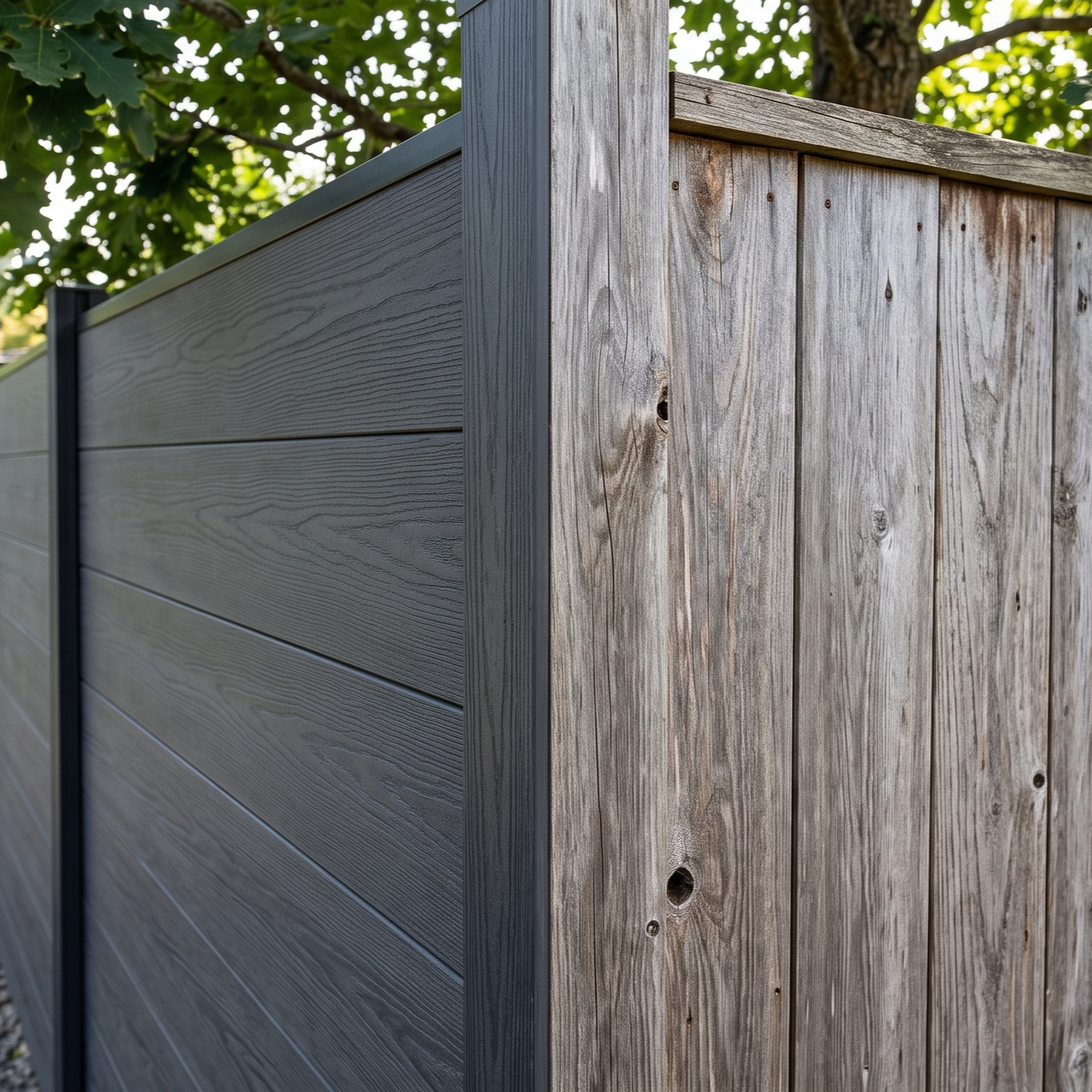
Quick Answer: Wood costs less to put up and is the easiest to repair or restain, but it needs regular sealing and will eventually rot, gray, and warp. Composite costs more up front and looks a touch less natural, yet it skips the staining, shrugs off rot and insects, and holds its color for far longer. The right pick depends on how much upkeep you want to sign up for and how long you want the fence to last.
Two homeowners can stand in front of the same wood fence and see two different things. One sees warm, natural boards that will look even better with a coat of stain next spring. The other sees a chore that comes back every couple of years, plus the day a decade out when a post at the soil line finally gives. Composite fencing exists mostly for that second person, and choosing between the two comes down to understanding what each material is actually made of and how it behaves once it is in the ground.
Here is how they stack up on the things that decide it: upkeep, how long they last, how they look, what they cost you over time, and how they handle a repair.
What Each Material Actually Is
Wood fencing is milled lumber, most often cedar or pressure-treated pine, cut into pickets and rails and fastened to posts. Cedar carries natural oils that help it resist rot and insects, which is why it holds up better than untreated pine, while pressure-treated pine leans on chemicals forced into the wood to do the same job. Either way, it is an organic material, so it lives and breathes with the weather. It takes on moisture and swells, dries out and shrinks, and every one of those cycles works on the boards.
Composite fencing is a manufactured board built from wood fibers blended with recycled plastic, then formed into pickets and panels. The wood content gives it a grained, wood-like face; the plastic binds it into something that does not absorb water, feed insects, or break down the way lumber does. It is closer to a deck board than a tree. That single difference, organic versus manufactured, drives almost everything else that separates the two.
Upkeep: The Real Dividing Line
If you strip the comparison down to one factor, this is the one most people actually feel.
Wood asks for regular attention. To keep it from graying and drying out, it wants a fresh coat of stain or sealer on a recurring schedule, and skipping that schedule is how a wood fence goes from handsome to weathered. The finish is also what slows down the moisture cycling that leads to warping and cracking, so upkeep is not just cosmetic. It is part of what keeps the fence sound.
Composite drops the staining and sealing entirely. The color and the weather resistance are built into the board at the factory, so there is no finish to reapply. It is not truly zero-effort, but the maintenance it requires is closer to washing than to restoring. For a homeowner who would rather not spend weekends with a stain brush, that gap is the whole argument.
How Long Each One Lasts
Longevity follows directly from what the material is made of. Wood is fighting a slow battle against the elements the entire time it stands. Sun bleaches the surface gray, rain and humidity feed rot, and insects treat certain species as food. Even a well-kept wood fence eventually shows its age, usually starting where the posts meet the soil and stay damp.
Composite is not fighting that same battle. Because it does not absorb water or provide anything for insects to eat, it retains its structure and color much longer, which is where it earns back the higher starting cost. In a humid, storm-prone climate, the difference sharpens. Warm, wet air speeds up the decay that shortens a wood fence's life, though that same heat is exactly what makes composite's expansion behavior something to plan for, so neither material gets a free pass from the weather.
Looks: Natural Grain vs Engineered Consistency
Wood wins on pure authenticity because it is the real thing. The grain, the slight variation from board to board, the way it takes a stain, none of it is imitated. Composite mimics that look convincing, but up close, a discerning eye can sometimes tell it is engineered rather than grown, and the uniformity that makes it low-maintenance also makes it read a little more manufactured. Which one you prefer really is a matter of taste, and it is worth seeing both in person before you decide.
Cost, Framed Honestly
The fair way to compare costs is over the life of the fence rather than at the moment of installation.
Wood usually has the lower upfront material cost, which is part of why it stays popular. What it asks for in return is the recurring cost of stain, sealer, and the labor or weekends to apply them, plus board and post replacements as the years take their toll. Composite reverses that shape: you pay more at the start, then very little afterward, because there is no finish to buy and reapply, and far less to replace. One is a smaller bill now with ongoing costs behind it; the other is a larger bill now that mostly stops there.
| Factor | Wood | Composite |
|---|---|---|
| Maintenance | Regular staining or sealing | Occasional wash, no refinishing |
| Lifespan | Shorter; rots and weathers over time | Longer; resists rot and insects |
| Look | Natural grain, real variation | Wood-like but more uniform |
| Cost | Lower upfront, higher over time | Higher upfront, lower over time |
| Repair | Board by board with common lumber | Matching panels and specific parts |
What Both Fences Still Need
For all their differences, the two share a foundation, and it is the part that decides whether either fence stands straight for its full life. Both rely on posts set properly in concrete footings dug below the frost-affected zone, because a fence is only as sound as what holds it up. Skimp there, and the best material in the world will lean.
From that shared base, the requirements diverge. Wood needs the right species for the climate and the right finish applied on schedule to reach its potential. Composite needs the manufacturer's specific hardware and, importantly, the correct expansion gaps left between boards and panels. Composite expands and contracts with temperature more than wood does, so those gaps are not optional. Leave them out, and a hot afternoon can bow a panel that would have sat flat if it had been given room to move. This is also why composite's weight and movement often call for a heavier or reinforced post system rather than the standard posts a wood fence uses.
Think of it like leaving room for a bridge's expansion joints. The span looks solid and finished, but it is built with deliberate gaps so the material can expand and contract with the seasons without buckling. Composite panels want the same courtesy, and a correct install builds that room in from the start.
So Which One Should You Choose
There is no single winner, only the right match for how you plan to live with the fence. Lean toward wood if you value the lowest upfront cost, want the most natural look, and do not mind, or even enjoy, refreshing the finish every so often. Lean toward composite if you would rather buy it once, skip the staining for good, and get the longest service life, and you are comfortable paying more at the start to get there. Both are sound fences when installed correctly. The decision is really about which set of trade-offs fits your household, and an on-site look at your yard, soil, and goals is the fastest way to land on the answer.
Frequently Asked Questions
Composite generally outlasts wood, and the reason is structural rather than cosmetic. Composite does not rot and gives insects nothing to feed on, so it holds its integrity year after year. Wood, even when it is well maintained, eventually cups, checks, and decays, and the failure usually starts at the bottom where the pickets and posts meet the soil and trapped moisture and never fully dry out.
It needs far less than wood, but "maintenance-free" oversells it. You skip the staining and sealing entirely, which is the big win. What composite still benefits from is an occasional wash to clear mildew, pollen, or grime that can settle on the surface in shaded or damp spots. Think of it as cleaning rather than refinishing, and do not buy it expecting to never touch it again.
Composite moves with temperature more than wood does, but the installation is designed to accommodate that movement. The boards are held with hidden clips or slotted fasteners that let each one slide as it heats rather than pinning it in place. The maker also specifies an end gap, often around an eighth of an inch or more, so that a hot afternoon has somewhere to expand into rather than bowing. Set with those clips and that gap, a panel stays flat; skip them, and the warping people warn about is what you get.
Wood is the flexible one here. It can be stained or painted virtually any color and refreshed or recolored over the years as your taste changes. Composite comes in a set range of factory colors and generally should not be painted, since paint does not bond well to its surface and can void the product warranty. With composite, you choose the color up front and commit to it, so pick carefully at the start.
Wood is far simpler to fix. A cracked or broken picket comes out, and a replacement goes in using common lumber you can pick up at any yard, one board at a time. Composite repairs are more involved because you need panels or pickets that match the original product line and color, plus the specific parts that go with them, and sourcing an exact match can mean a longer wait before the repair is done.
Both depend on posts set correctly in concrete footings, so the underground fundamentals are shared. Above ground, the demands differ. Composite's added weight and expansion often call for a manufacturer's dedicated post system or reinforced posts rather than the standard wood posts used in a lumber fence. Using an underbuilt post under a heavier composite panel is a common way to end up with a lean, so the post spec is worth matching to the material.
Book a free on-site consultation — get a straight comparison of composite and wood for your exact yard and soil. The Fayetteville Fence Company LLC serves Fayetteville, Hope Mills, Raeford. Call (910) 994-3634.
