
NC Pool Fence Code: 5 Rules Most Homeowners Don’t Know
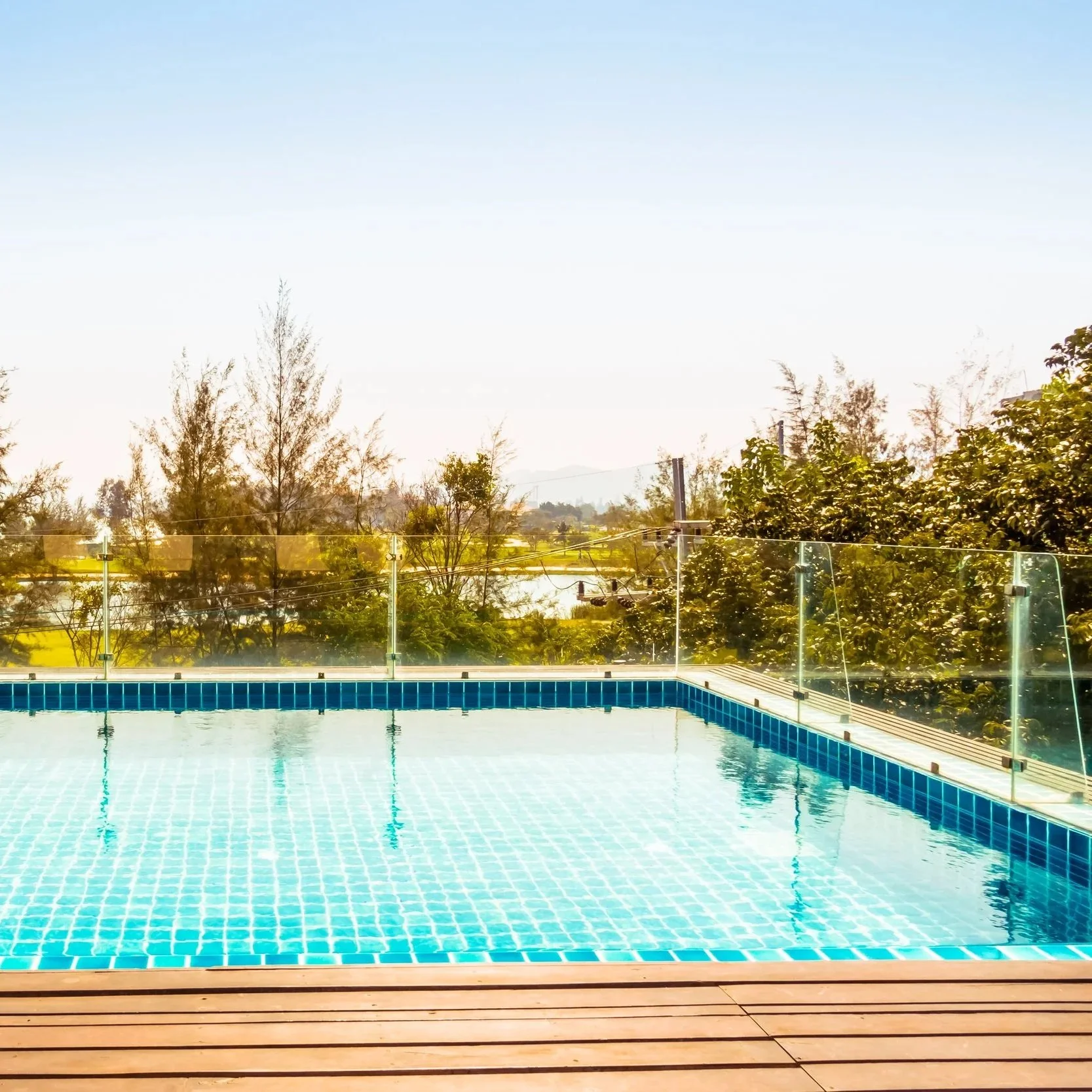
Modern swimming pool surrounded by glass safety fencing highlighting North Carolina pool barrier requirements, secure access, and residential code compliance.
If you have a pool, are installing one, or are buying a home with a pool in Fayetteville, your fence must meet code, and it is stricter than most homeowners realize. The NC residential pool barrier code reflects national pool safety standards developed from decades of drowning data. The five rules below are the ones that surprise homeowners most often at inspection. Knowing them upfront prevents costly rework and lost weeks waiting for re-inspection.
Why Pool Fence Code Exists
Pool fences are not bureaucratic overhead. They prevent drownings. Most pool drownings involve children under five years old, and the majority happen at residential pools without adequate barriers. NC residential pool barrier code reflects national standards developed after decades of drowning data, not arbitrary rule-making.
These rules set the minimum barrier between a pool and a child who slips out of an unsupervised moment. They are safety requirements, not items to negotiate down.
Rule 1 — The Fence Must Be at Least 4 Feet Tall (And Sometimes Higher)
NC's code requires residential pool barriers to be at least 48 inches (4 feet) in height, measured from the ground on the side facing away from the pool. Some local jurisdictions and HOAs require taller barriers, with 5 or 6 feet common in newer subdivisions. Verify your jurisdiction’s minimum requirements before designing the fence.
The 4-foot minimum is measured from the surface a child could stand on, not necessarily from the ground line at every point. If there is a deck, raised planter bed, or retaining wall within 3 feet of the fence on the outside, the height must be measured from that surface. A 4-foot fence on top of a raised patio that gives a kid a 2-foot boost is not a code-compliant 4-foot barrier on your property.
Common reasons fences fail this rule: existing fences shorter than 4 feet, ground contour differences along the fence line, and decks or features that effectively reduce the fence’s height from the climbing side.
Rule 2 — Gaps Below 4 Inches at Every Point
NC’s code limits openings in pool fencing to 4 inches or less at any point along the barrier. The rule applies to:
Vertical pickets (spacing between them)
The gap between the fence and the ground
Any opening in horizontal rails or decorative elements
Gaps under gates and at hinge points
The reason for 4 inches: a child’s head will not fit through a 4-inch opening, but it will through anything larger. The rule prevents head entrapment and climbing.
Common reasons fences fail this rule: chain link with mesh openings larger than 4 inches in diameter, decorative fencing with horizontal slats spaced too widely, ground clearance issues where soil has eroded along the fence line, and gaps at gate hinge points that open up over time. Walk your fence line annually and measure with a 4-inch ball or similar gauge to catch ground-clearance issues before inspection.
Rule 3 — No Climbable Features on the Outside
NC’s code prohibits horizontal members or decorative features on the outside of the fence (the side away from the pool) that could function as a foothold or handhold. Specifically:
Horizontal rails on the outside surface must be at least 45 inches apart
Decorative scrollwork, lattice, or trellis cannot create climbable footholds on the outside
Surface texture must not provide grip for small hands and feet
The classic failure case is a privacy fence with horizontal rails every 6 inches on the outside. A code-compliant pool fence puts any horizontal members on the inside (pool side) so a climbing child encounters a smooth outer face.
This rule eliminates many decorative wood fence styles for pool use unless they are specifically designed with climbability in mind. If your existing fence has decorative outside features, confirm whether they qualify as footholds before assuming the fence will pass inspection.
Rule 4 — Gates Must Be Self-Closing and Self-Latching
NC code requires every gate that accesses the pool area to meet four specifications:
Self-closing: the gate returns to the closed position automatically without being pushed
Self-latching: the latch engages without requiring manual closure
Latched at a height of at least 54 inches from the ground (out of children’s reach)
Opening outward, away from the pool
The self-closing requirement applies to every gate, including side-yard gates that lead to the pool area. A gate that closes when pushed but does not return to its original position is not code-compliant. Spring hinges, hydraulic closers, and weighted gravity closers all qualify when they reliably close the gate every time.
Common reasons gates fail this rule: hinges that no longer self-close after years of use, latches mounted at standard 36-inch height instead of 54 inches, gates that swing inward toward the pool, and modifications that disable the self-closing mechanism. Test your gate hardware monthly during pool season to catch hardware fatigue before inspection.
Rule 5 — Door Alarms or Pool Covers When the House Is Part of the Barrier
When the house wall serves as one side of the pool barrier (a common setup where the pool sits adjacent to the home), NC code requires additional protection on doors leading from the house to the pool area:
Door alarms that sound when the door opens
Self-closing and self-latching mechanisms on those doors
Or a power-operated pool safety cover meeting ASTM standards as an alternative
This rule surprises many homeowners because it goes beyond the fence itself. A code-compliant pool fence around three sides of your pool does not satisfy code when the fourth side is the house, and the doors lack alarms or alternative barriers.
The practical implication: pool fence design should account for whether the house wall is part of the barrier. When it is, address door alarms or a safety cover separately, not as an afterthought after fence install.
When These Rules Get Stricter — Local and HOA Variations
NC code sets the floor. Local jurisdictions and HOAs can impose stricter requirements:
Some Cumberland County subdivisions require 5-foot or 6-foot minimum heights for pool fences
Some HOAs require specific materials, often aluminum or vinyl, and less commonly wood
Some require additional features like specific latch types or alarm systems beyond the state minimum
Always verify your local requirements before installing. Building from the NC code as a baseline does not guarantee approval when local rules go further. The Fayetteville Inspections Department and your HOA’s architectural review committee are the two sources to check.
What Inspection Actually Looks Like
A pool fence inspection in Fayetteville typically takes 15 to 20 minutes. The inspector measures fence height at multiple points, tests gate self-closing and self-latching, measures gaps with a gauge, and checks for climbable features on the outside.
Most failed inspections fail on one or two specific issues. Gate hardware that does not self-close reliably is the most common. Ground clearance exceeding 4 inches at low spots along the fence line is the second most common. Both are correctable, but each correction means scheduling a re-inspection, which adds days to your project timeline.
A contractor who has installed pool fencing in the area knows what local inspectors check most carefully and designs around those points before the first inspection.
Frequently Asked Questions
Generally, yes, when the pool depth exceeds 24 inches, and the pool is permanent or semi-permanent. Above-ground pools with non-removable ladders typically need barriers around the entire pool. Removable ladder systems can sometimes substitute for a fence on small above-ground pools, but only when the ladder is verifiably removed when the pool is unsupervised.
Usually yes. A pool cover is not a substitute for a barrier under most code interpretations. ASTM-rated power-operated safety covers can satisfy specific requirements (mainly the house-as-barrier alarm rule), but they do not eliminate the need for the surrounding fence. Verify with your local permit office before relying solely on a cover.
Bring it into compliance before any inspection event. The most common scenarios that trigger inspection are pool installation, fence permit applications, home sale (buyer’s inspection often flags non-compliant pool fencing), and insurance audits. Non-compliant fencing can also expose the homeowner to liability in the event of an injury. The Fayetteville Fence Company LLC offers non-compliant fence assessments for homeowners trying to figure out whether to retrofit or replace.
Yes, with the door alarm or safety cover requirements covered in Rule 5. The house wall itself meets the barrier requirements, but every door leading to the pool area must either have alarms and self-closing hardware or be paired with a power-operated pool cover. Sliding glass doors are the most common location for failed compliance.
Industry pricing for pool fencing typically runs $30 to $60 per linear foot installed, depending on material. For a typical pool perimeter of 80 to 120 feet, that lands in the $2,400 to $7,200 range, with self-closing gate hardware adding to the gate portion of the budget. Aluminum is the most common pool fence material because it satisfies code easily and holds up in Cape Fear humidity.
The Fayetteville Inspections Department for properties inside city limits, and the Cumberland County permitting office for properties in unincorporated areas. Inspections typically happen at fence installation, pool installation, and home sale. HOAs may also enforce their own requirements, separate from city or county inspections.
Pool fence code is detailed because pool drownings are preventable. The rules above cover the points that surprise homeowners most often at inspection. Pair a code-compliant fence with self-closing gates, properly placed latches, and alarms on house-side doors when the house is part of the barrier. Then schedule your inspection, knowing the answers are in place before the inspector arrives.
Need a code-compliant pool fence in Fayetteville or Hope Mills? The Fayetteville Fence Company LLC designs and installs pool fencing that meets NC code and local requirements, with free estimates and 12-month installation warranties. Call (910) 994-3634 to schedule.
