
Aluminum vs Wrought Iron Fences: They Look the Same. They’re Not.
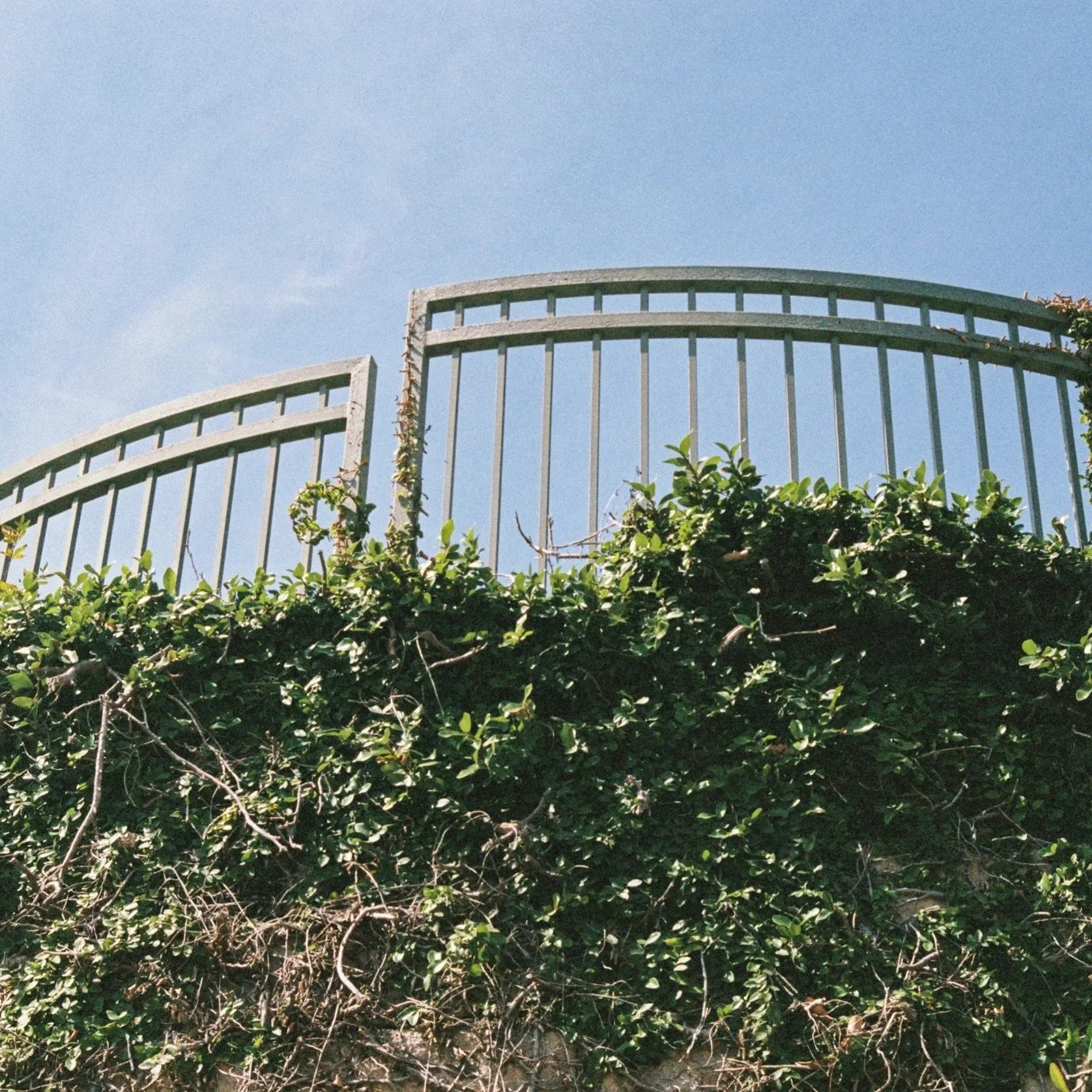
Black ornamental metal fence above landscaped hillside showcasing differences between aluminum and wrought iron fencing for residential properties and durability.
If you are weighing aluminum and wrought iron for an ornamental fence on your Fayetteville property, the visual gap from the street is small, and the cost gap is not. Wrought iron runs thousands more on a typical residential project. The aesthetic differences become visible at close range and over years of ownership, not in the silhouette across the yard. Here is how to decide which one your property actually needs.
From the Street, They Look Identical
A 5-foot black ornamental fence with vertical pickets and decorative finials looks the same in aluminum or wrought iron from across the yard. Both have the formal silhouette, similar pickets-and-rail patterns, and powder-coated black finish.
The differences show up only at close range or after years of ownership. Up close, the wrought iron appears to have more mass; aluminum has thinner walls. Over time, the wrought iron either weathers gracefully with maintenance or rusts visibly without. The aluminum stays the same.
That visual identity at a distance is what makes the comparison difficult. Two fences that look identical at install can age very differently.
Material Differences That Drive Everything Else
Aluminum is a lightweight metal that does not rust because it forms a protective oxide layer on its surface. Wrought iron is solid iron, dense and heavy, that does rust without protective coating. Modern “wrought iron” is sometimes powder-coated steel rather than true wrought iron, which adds a third option to the comparison covered later.
These material differences drive everything that follows: weight, cost, maintenance, longevity, and even what kind of post foundation each requires. Wrought iron’s weight in particular changes your install math: the posts on your property must hold more, the freight costs more, and the labor takes longer.
Cost — Aluminum Is Cheaper by Thousands
Industry pricing in the Cape Fear region typically runs $30 to $55 per linear foot installed for aluminum ornamental fence and $40 to $100 per linear foot installed for wrought iron, with true wrought iron at the higher end. For a typical 200-foot residential ornamental fence on your property, aluminum costs $6,000 to $11,000 while wrought iron costs $8,000 to $20,000.
The cost gap reflects raw material prices, manufacturing complexity, and shipping weight. Wrought iron is heavier, which increases freight costs and labor during installation. Custom wrought iron designs cost more than standard panels in either material.
The dollar difference is meaningful for most homeowners. The bottom-of-range aluminum versus the top-of-range wrought iron can be a $14,000 swing on your 200-foot project. That gap is what makes the rest of the comparison matter; wrought iron has to justify the premium, not the other way around.
Lifespan in Cape Fear Humidity — Aluminum Wins by a Wide Margin
Aluminum’s natural rust resistance gives it a lifespan advantage in NC humidity. Realistic ranges look like this:
Aluminum: 25 to 35 years or more, with no maintenance beyond occasional cleaning
Wrought iron with proper coating and regular maintenance: 30 to 50 years
Wrought iron with neglected coating: 10 to 15 years before rust damage becomes serious
The wrought iron range depends entirely on maintenance. A well-cared-for wrought iron fence outlasts aluminum. A neglected one fails faster than aluminum. Most homeowners do not maintain their fences carefully enough to hit wrought iron’s high-end lifespan, which is the lifespan number you should expect on your own property only if you actually plan to do the work.
In Cape Fear’s humidity specifically, the maintenance schedule matters more than in drier climates. Wrought iron in 70% average humidity needs sanding, priming, and repainting every 2 to 5 years to prevent rust pitting from establishing on the surface.
Maintenance — Aluminum Is Nearly Maintenance-Free; Wrought Iron Is Not
Aluminum maintenance is almost nothing: occasional rinsing to remove dirt and salt residue, and hardware tightening when something loosens. That is the entire schedule.
Wrought iron maintenance is meaningful work. Annual inspection of your fence for rust spots, especially at welds and joints. Sanding any rust to bare metal. Spot priming with rust-inhibiting primer. Repainting with rust-resistant exterior paint every 2 to 5 years. Inspection of welds for fatigue cracks on older fences.
The maintenance gap is the practical reason most homeowners in NC end up with aluminum, even when wrought iron’s appearance is preferred. A wrought iron fence on your property without regular maintenance deteriorates visibly within 10 years. The fence still functions, but is starting to look like wrought iron left untouched for a decade: rust streaks at every joint, paint flaking from the corners, that distinct neglected-iron appearance.
Weight, Strength, and Vandalism Resistance
Wrought iron is meaningfully heavier and stronger than aluminum. A typical wrought iron picket weighs 3 to 5 times as much as the equivalent aluminum picket. The weight matters in two scenarios.
Vandalism resistance: Wrought iron is harder to damage with bolt cutters, blunt force, or vehicle impact. For commercial properties, security-conscious homeowners, or fences along high-traffic streets, the additional structural strength is worth paying for.
Wind resistance: Both materials have open picket designs that let wind through, so they perform similarly in storms. Wrought iron’s weight makes it slightly less likely to deform under impact from flying debris during hurricanes, though both fare well compared to solid wood or vinyl panels.
For most residential applications in Fayetteville and Hope Mills, aluminum’s strength is more than sufficient for your fence’s job. The vandalism scenario rarely applies to fenced residential back yards.
When to Choose Aluminum
Aluminum is the right call for most residential ornamental fence projects in NC. Choose aluminum when:
You want the ornamental metal aesthetic without the maintenance schedule
Budget matters, and the cost difference is meaningful for your project
The fence will be in a low-vandalism residential setting
Your property is in a Cumberland County HOA that allows ornamental aluminum
You are staying long-term and want a near-zero ongoing fence cost
For pool fencing specifically, aluminum is almost always the right choice. Code-compliant designs are widely available, the material handles moisture exposure without rust, and HOAs commonly approve aluminum where they might restrict wrought iron’s bulkier appearance on a pool perimeter.
When to Choose Wrought Iron
Wrought iron is the right call in specific situations.
Historic property restoration. A 1920s home with original wrought iron details deserves a wrought iron fence. Aluminum looks period-incorrect on Victorian or Craftsman architecture, and the visual gap is more obvious up close than the comparison-from-the-street rule suggests.
Truly custom designs. Custom scrollwork, unique finials, or one-of-a-kind designs are usually fabricated in iron. Aluminum custom work is more limited because the lighter profile constrains certain design elements.
Heritage estate or commercial security. When structural strength matters for your high-value property, a commercial site, or a fence integrated with security systems, wrought iron’s mass adds real protection that aluminum cannot match.
Aesthetic preference and willingness to maintain. Some homeowners prefer wrought iron’s heft and weathered patina. If you will actually do the maintenance, wrought iron rewards it with a 50-year fence, and an aesthetic aluminum cannot replicate.
A Third Option Worth Knowing — Steel “Iron-Look” Fencing
Some manufacturers make steel fencing designed to look like wrought iron, usually powder-coated steel with similar profiles and finials. Steel sits between aluminum and true wrought iron on every variable: heavier and stronger than aluminum, lighter and cheaper than wrought iron, more rust-prone than aluminum but more rust-resistant than untreated wrought iron because of the powder coating.
Industry pricing for steel ornamental fences run $35 to $65 per linear foot installed. Steel is a valid middle option if you want more strength than aluminum without wrought iron’s maintenance burden or cost.
The catch is quality variance. Lower-quality steel fencing on your property rusts within 10 years. High-quality powder-coated steel can run 25 to 30 years. Material grade matters more for steel than for aluminum or wrought iron, where the underlying metal is more standardized.
The Right Answer for Most Fayetteville Homes
For most residential applications in Fayetteville and Hope Mills, aluminum wins on the practical math. Lower cost. Lower maintenance. Sufficient strength for residential use. Climate-appropriate for Cape Fear humidity. The aesthetic difference is invisible from the street, and most homeowners who pick wrought iron for tradition end up regretting the maintenance schedule.
Wrought iron earns its premium in specific situations: historic restoration, custom designs, heritage estates, and security-driven installations. Outside those situations, aluminum delivers the same look at a lower ongoing cost to your property.
Frequently Asked Questions
Tap it. Aluminum sounds hollow and metallic; wrought iron sounds dense and dull. Pick up a loose picket if one is available; aluminum weighs a fraction of what wrought iron weighs. Run a magnet against it; magnets stick to wrought iron and steel but not to aluminum. From across your yard, the two materials are nearly indistinguishable.
Yes, for most homeowners. Aluminum holds its powder-coat finish for 25-plus years with minimal maintenance. Wrought iron in good maintenance condition looks better than aluminum at year 10; wrought iron with neglected maintenance looks worse. The expected appearance gap depends entirely on whether the wrought iron fence has been maintained.
Aluminum can be painted, but achieving an authentic wrought iron patina on your fence is difficult because aluminum does not weather the same way iron does. Specialty finishes can mimic the look at installation, but tend to fade or chip over time. For homeowners who specifically want a weathered-iron look, wrought iron is the better choice.
Almost never. Pool fencing benefits from aluminum’s rust resistance, which matters in the chlorinated water and humidity of your pool environment, and the lower cost frees the budget for code-compliant gates and other safety features. Wrought iron pool fences exist but are usually chosen for aesthetic reasons on high-end properties, not practical ones.
Look for fence repair contractors who specifically list wrought iron in their service list. The repair work involves welding, sanding, priming, and repainting, which not every fence company handles. The Fayetteville Fence Company LLC handles wrought iron repair when your existing fence is structurally sound enough to justify the work.
Some, though they are rare. A few historic-district HOAs and a small number of high-end subdivisions specify wrought iron for street-facing fences. Most Cumberland County HOAs allow ornamental aluminum because the visual gap from the street is small and aluminum is widely available in approved styles.
The visual identity is the trap. From the street, aluminum and wrought iron look the same. Up close and over time, they age differently. For most Fayetteville homes, aluminum is the smarter spend and the easier ownership. For homes where wrought iron’s heritage, custom design, or structural mass actually matter, wrought iron earns its premium. The right answer depends on which side of that line your property sits on.
Trying to decide between aluminum and wrought iron for your Fayetteville or Hope Mills property? The Fayetteville Fence Company LLC offers free estimates on both, with 12-month installation warranties. Call (910) 994-3634 to schedule.
